
Xiaoze Xie: In the Name of the Book
March 6, 2026 – April 17, 2026

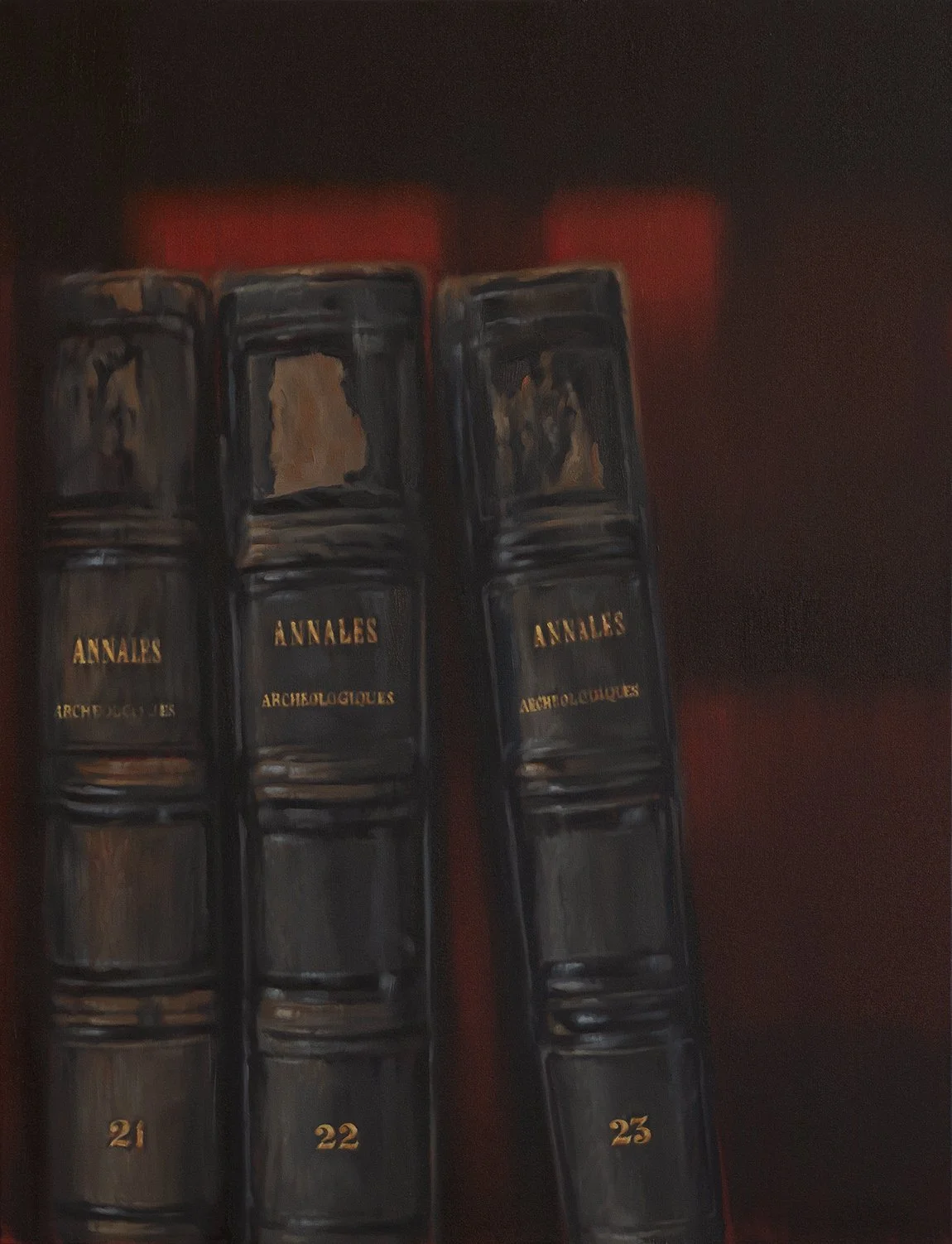
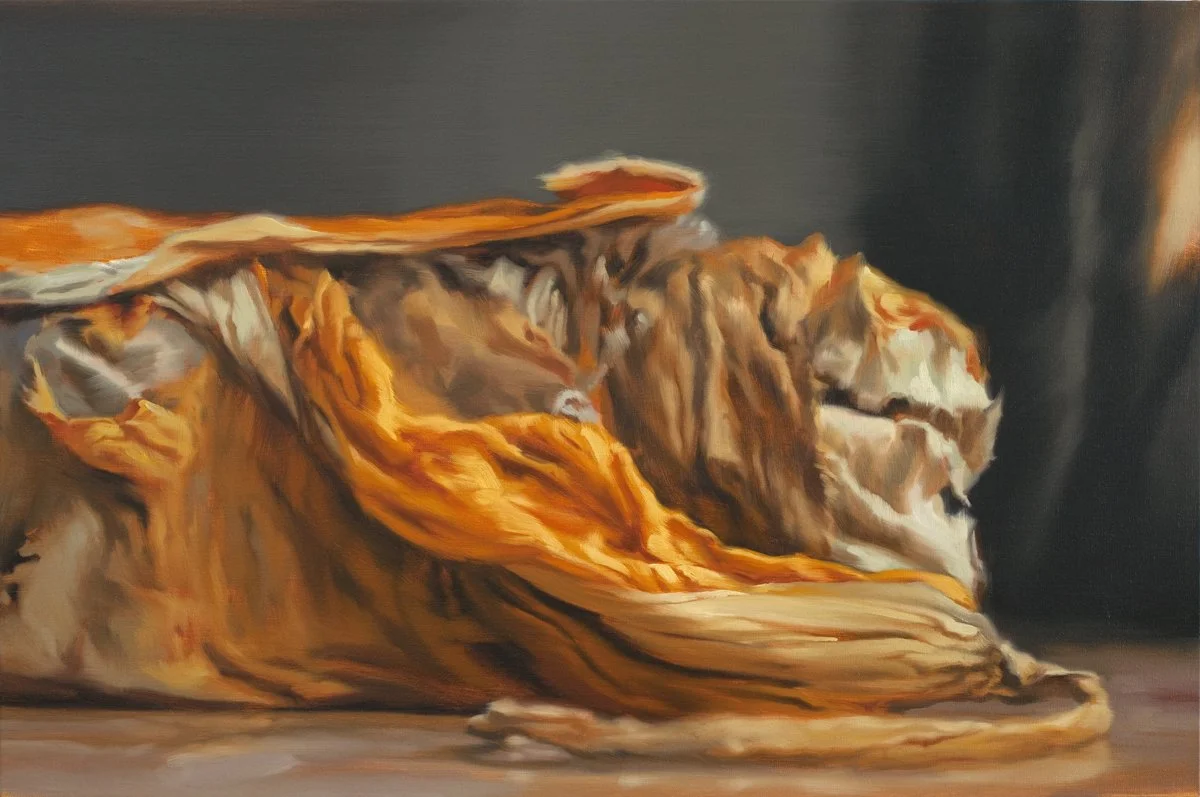
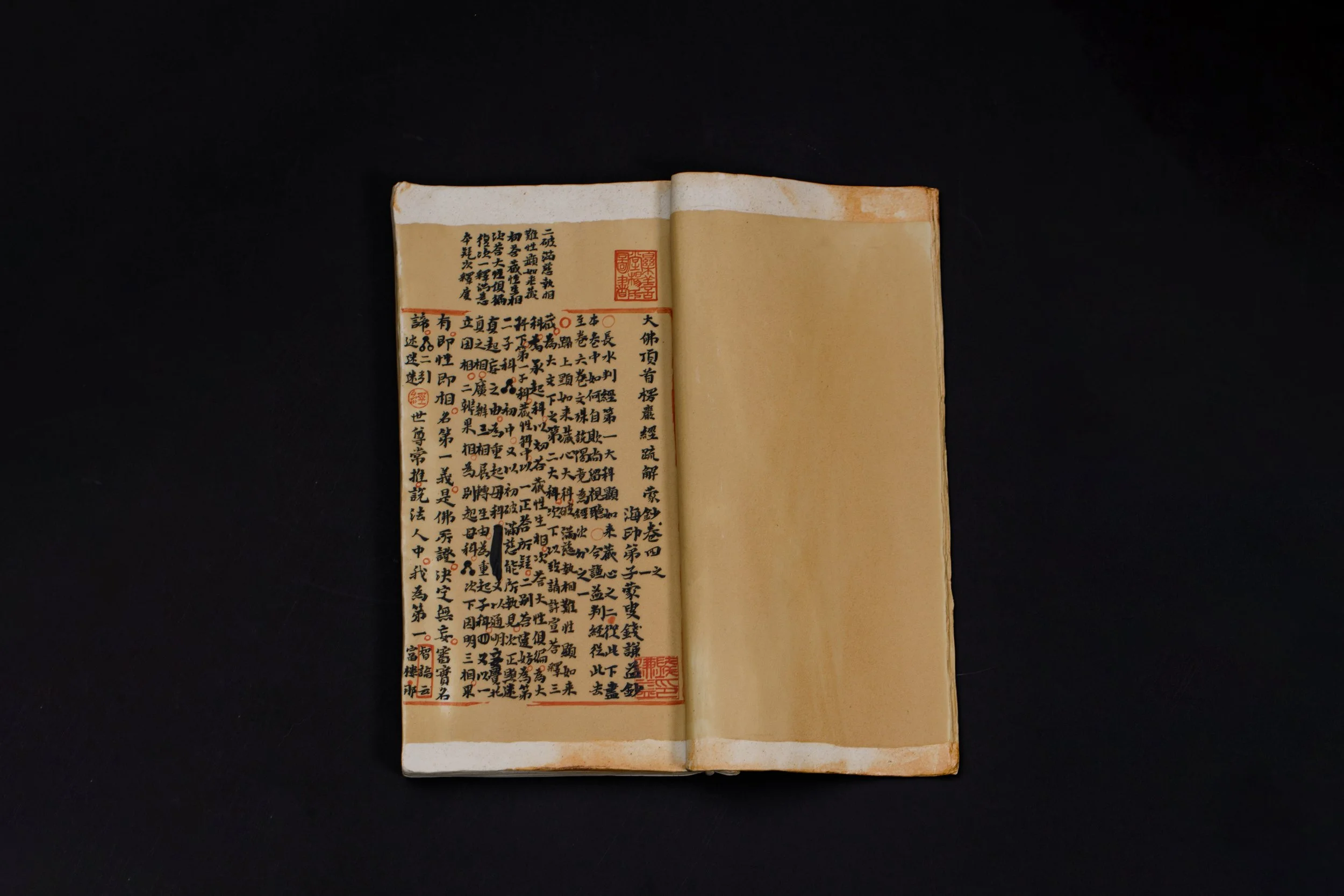
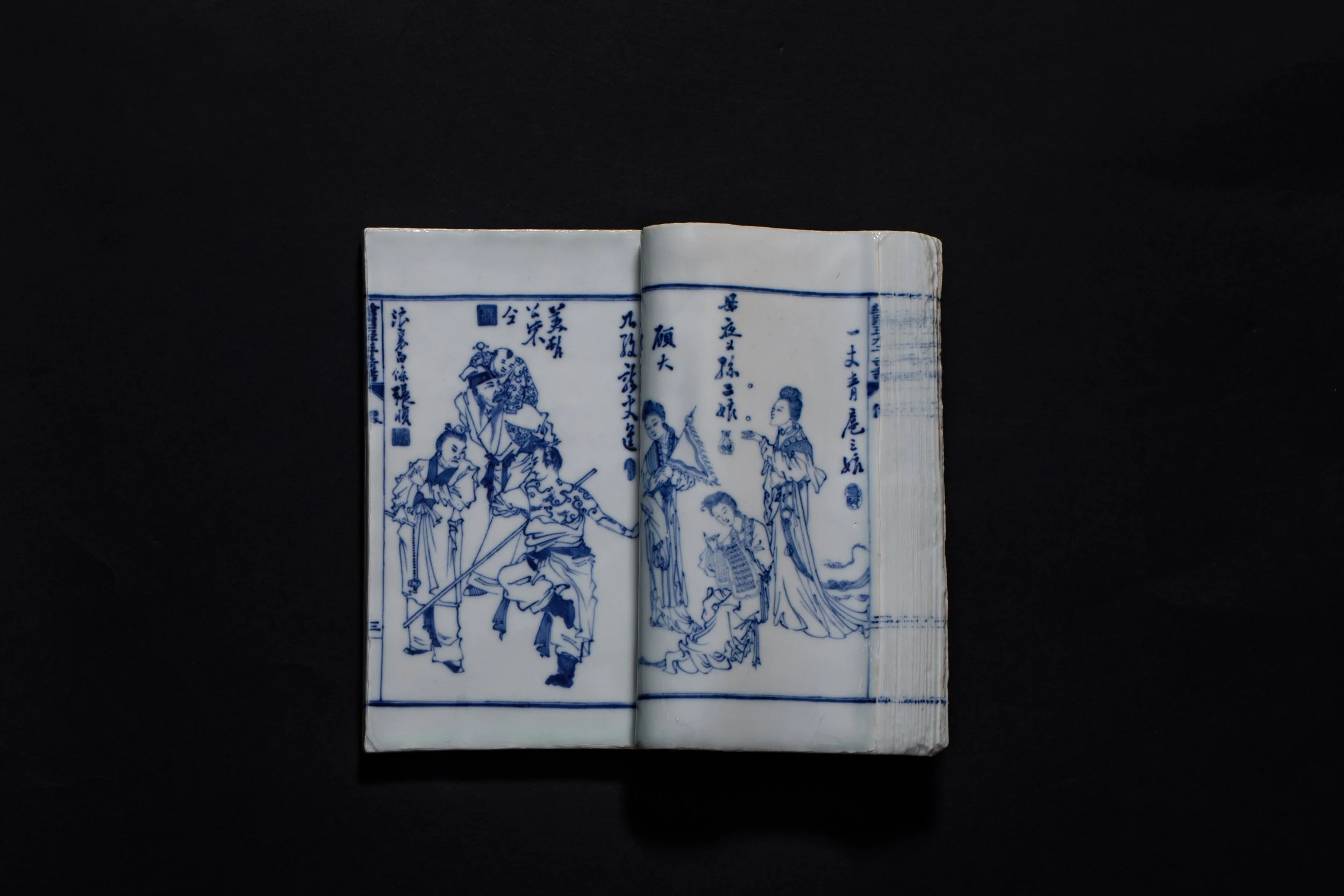
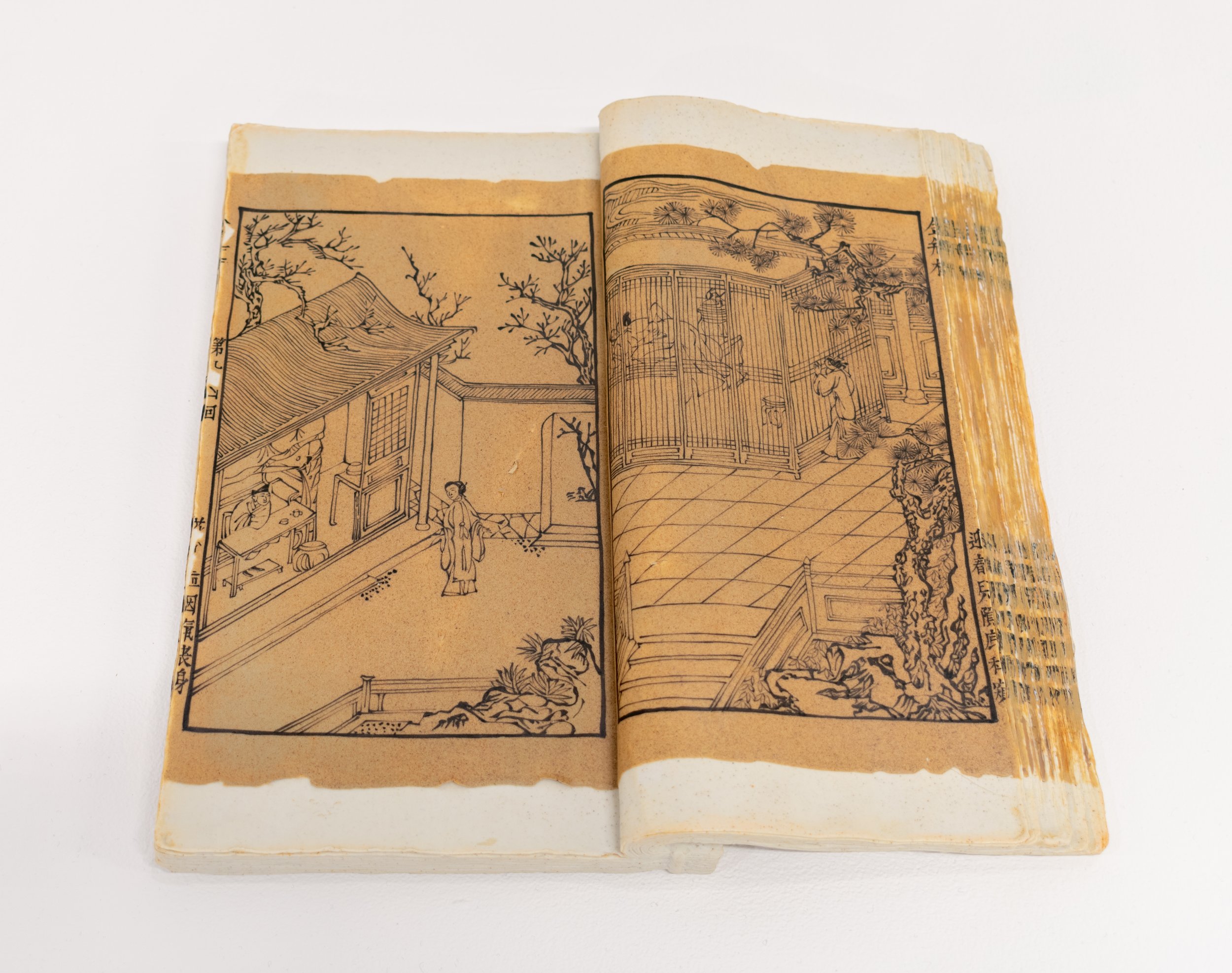
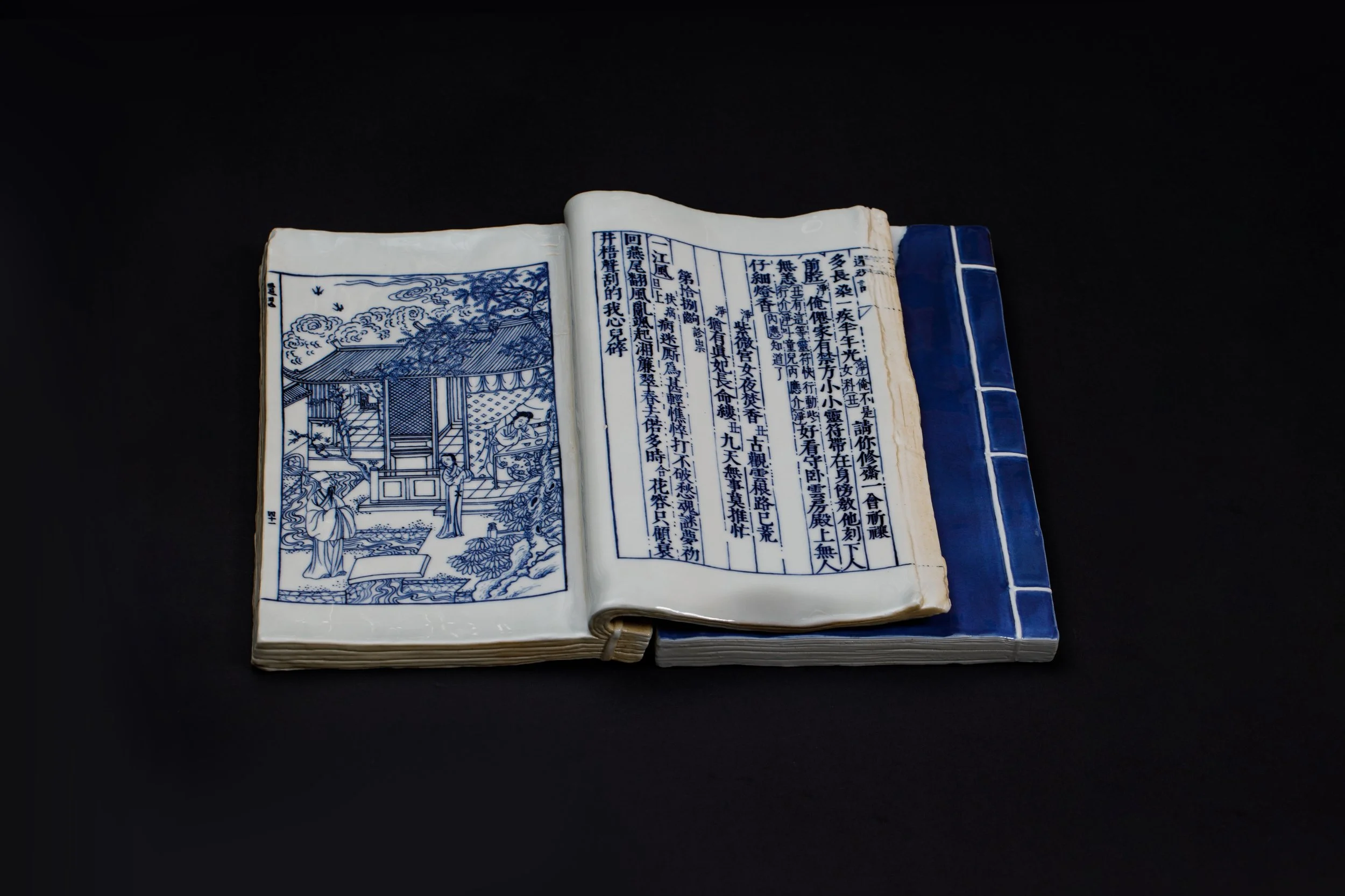

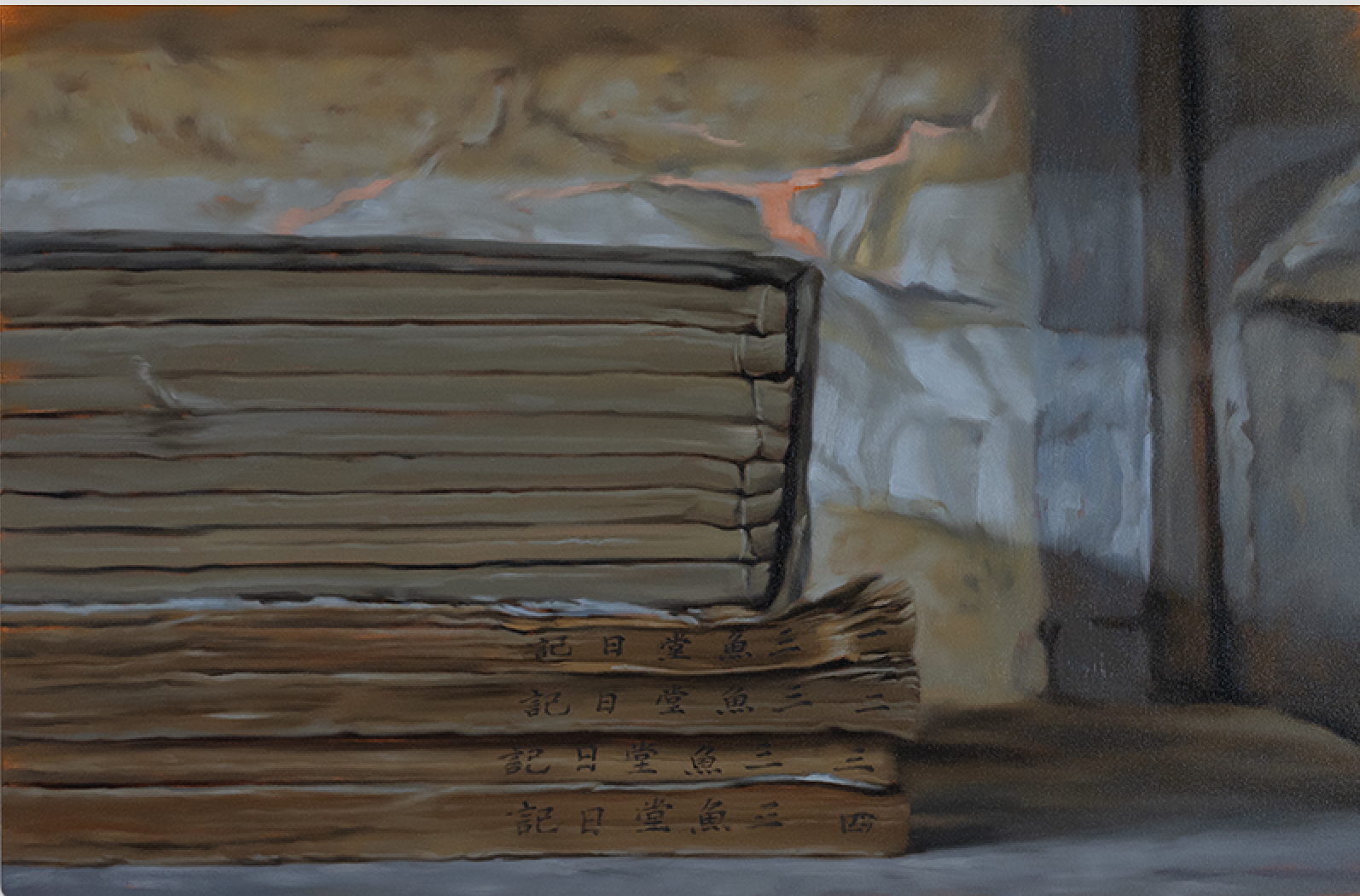

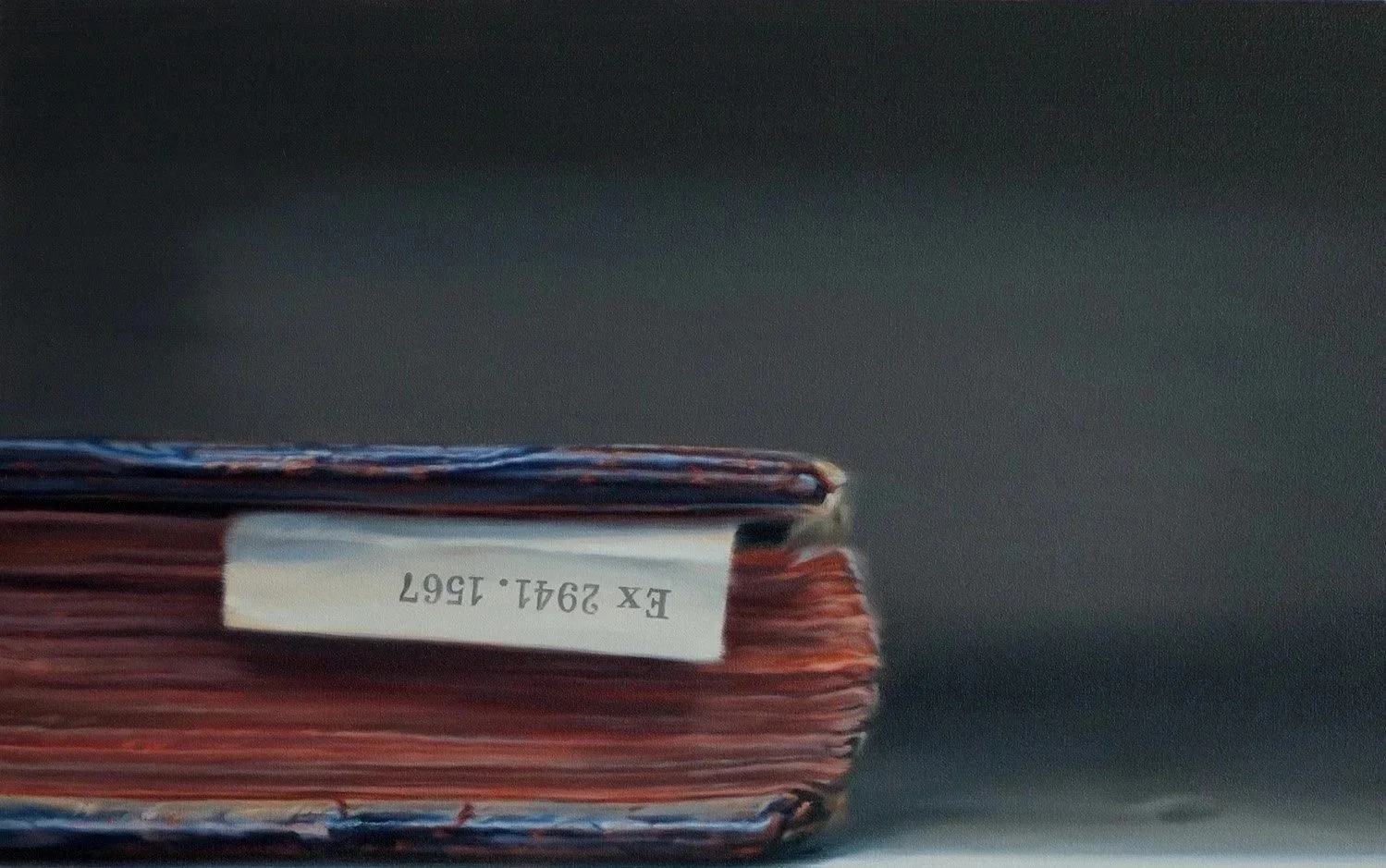
Sapar Contemporary is pleased to announce the gallery’s first solo exhibition by Xiaoze Xie. The exhibition is titled in the Name of the Book and draws from the artist’s long standing Library series of paintings and his research-based Forbidden Book. Life-size porcelain sculptures of the books from the Forbidden Books project will be shown in NYC for the first time.
In the Name of the Book
The recent work of Guangdong-born artist Xiaoze Xie pertinently, alarmingly mirrors current headlines. Both timely and urgent, it is merely the tip of similarly themed projects that have consumed Xie for decades, centered on the crucial role of books as the guardians of free expression and the repositories of civilization’s accumulated knowledge. At the heart of this ambitious and singular practice (it’s a conception of protest art that is not only politically pointed but also pictorially elegant) are two series of works, the “Library,” which he began in 1993, soon after he arrived in America, and the “Chinese Library” which he started in 1995, both ongoing. They depict books, often in rare editions, that represent the wisdom of multiple cultures and countries, discovered in libraries and other institutional archives without emphasis on the specific content. The latter, however, led to “Forbidden Memories: Tracing Banned Books in China” in 2012, a project that named names, focusing on books that have been banned in China, a prohibition that has been on the rise globally in recent years, including in the United State, despite First Amendment guarantees.
As part of that project, Xie filmed a full-length documentary, Tracing Forbidden Memories (2017), about his search for outlawed books which took him to many regions of China, lamenting the incalculable number of books that have vanished in China without a trace. Going back millennia to the book burning ordered by Qin Shi Huangdi, the first emperor of China and believed to be the first that was historically recorded, Xie condemns the irreplaceable loss that such interdictions have created as he searches for disappeared books, dating from the Ming and Qing dynasties through the twentieth century to the present, their status often in flux, as regimes and political exigencies shift. “All I have found is a small fraction,” he said. “They have all been silenced, and the narratives they contain—the history, religious, philosophical, sociopolitical, literary and other cultural and scientific content are gone, which is a great loss to civilization.”
Xie passionately wants to recoup whatever he can of that loss, a quest that can be increasingly challenging when dealing with authoritarian regimes in an age of expansive, constant surveillance.
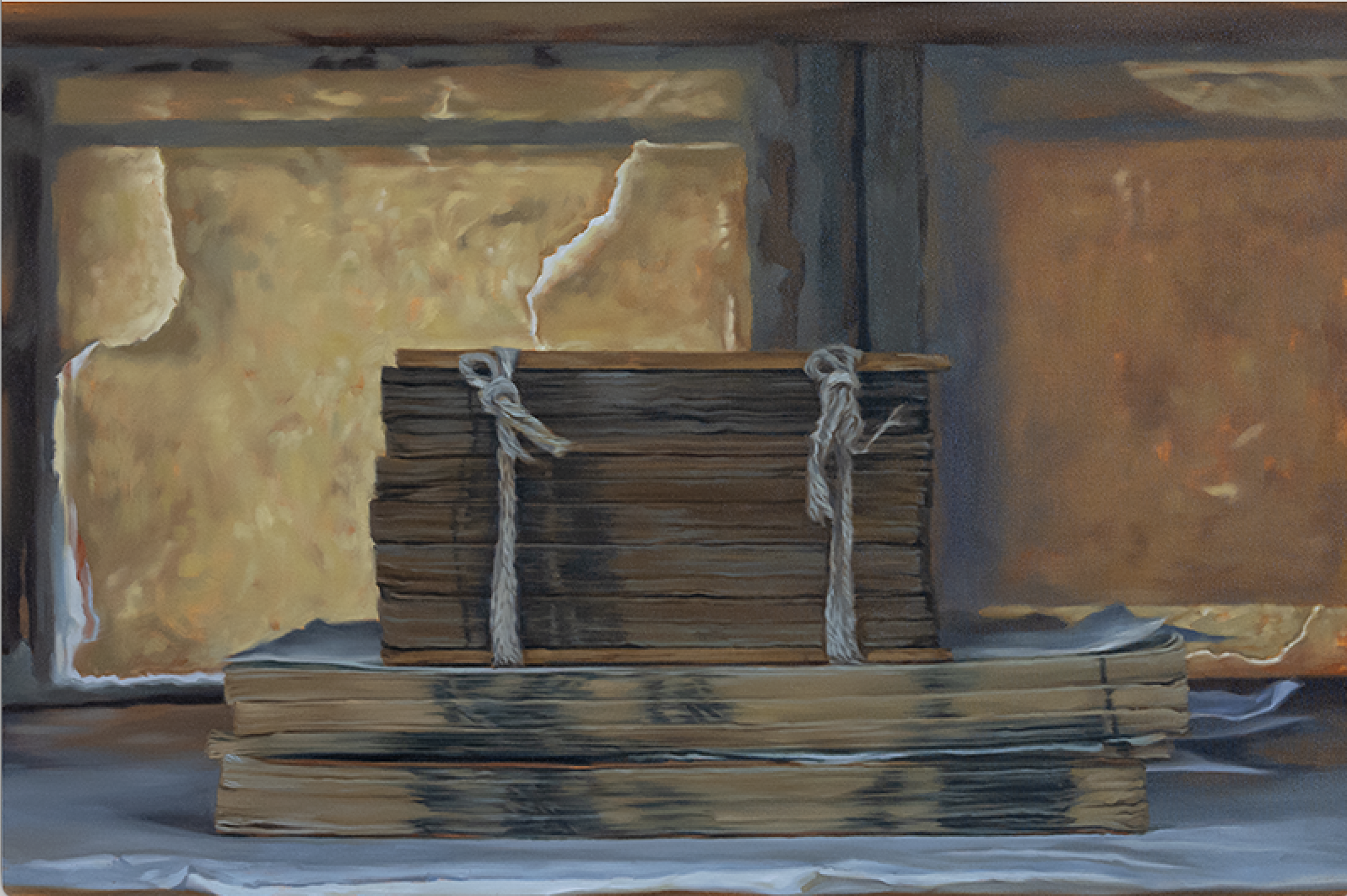
“In the Name of the Book,” Xie’s first solo in New York since 2019-2020, consists of oils from the two Library series. The books—both Western and Chinese, some classics, others obscure, with their respective types of binding and casings, usually displayed upright or on their sides—are more painterly than might be expected, enclosed in their own (often unknowable) histories, haloed by the patina of time.
Xie, an academically trained artist, is a gifted painter, his realism verging on trompe-l’oeil. His brushwork, however, expressive, sensuous, animates the imagery while retaining its fidelity to the actual objects. His depiction of textured leather, worn cloth or paper covers and brittle, tattered pages are so persuasive that you are tempted to reach into the painting to pull them out to read. The compositions are unstaged, often painted from photographs he has taken of the books as he found them, creating a further sense of spontaneity, immediacy.
The exhibition’s surprise are his newest endeavors: hand-made and hand-painted, cunningly rendered, to-scale porcelain sculptures, both glazed and unglazed. Xie compares the process of firing in porcelain to the burning of books, stating that “after high-firing, the sculptures in the form of books become hard, solid and seemingly strong and durable, but at the same time very fragile – just like culture.”
They grew out of the “Forbidden Books” project, begun in 2016 when Xie was at Jingdezhen, the world famous porcelain center, and are faithful replications—including the wonderful illustrations accompanying the text—of volumes that were once prohibited and now rehabilitated, such as The Golden Lotus (Voyeurism), 2019 (Jin Ping Mei in Chinese), banned multiple times for its explicitly erotic content since it first appeared in the 16th century. One detail that Xie points out is the white edges that peek out from some of these porcelain books. They represent slips of fresh paper that have been inserted between the aged leaves as safeguards. When the reader turns the pages, the original is not touched, reminding us that time also ravages.
Xie intentionally distances his works from still lifes (often making them several times larger than life) although they function as a kind of memento mori. However, they do not refer to the transience and mortality of individuals but of entire societies when books, their life’s blood, are imprisoned, banned, lost. His paintings might also be read, in their architectonic arrangement, as monuments of sorts, each a metaphoric library itself. Their primary subject, though, is a meditation on what books mean to us and how censorship diminishes us on every level, representing the precarity of knowledge, yes, but also, and more importantly, more hopefully, what escapes it, what can be recovered.
It might also be noted that despite enormous advances in production, printed books, requiring no additional support system, will be accessible when digitized versions might (catastrophically) not be, due to the obsolescence of the technology needed to power them or corruptions worse than any book burning.
Lilly Wei
About Artist
Xiaoze Xie (China/ US) was born in China the same year as the Cultural Revolution and as a young man he was a witness to the Tiananmen revolt. Since 1992 he has lived in the United States, working as an artist and professor of art with frequent trips back to his native country. These experiences have given him a unique perspective from which to observe the role of books and newspapers in the cultural life of China and the West and the ways that media preserve and distort our understanding of the world.
Xie explores these ideas in paintings with a realism so intense that it shades into abstraction. He has produced haunting representations of the battered spines of long neglected library books, of dusty stacks of old newspapers, and of fragments of front pages that offer glimpses of long forgotten events and personages. Bringing his concerns up to date, he has also made paintings that capture otherwise ephemeral scenes that flicker across the screen of the Chinese blogging website Weibo. Such works remind us that books, newspapers, and more recently, the internet are all subject to the vagaries of time, neglect and deliberate destruction and manipulation. One body of work involves the discovery and recovery of a cache of ancient Chinese manuscripts dating from the 4th to the early 11th centuries. Another emerges from a deep study of the history of banned and forbidden books in China over the last 2000 years.
Xie’s concerns are as current as today’s headlines, touching on censorship, media manipulation and the control of facts and data. But in presenting his ideas, whether in the form of paintings, photographs or videos, Xie deliberately slows down the relentless pace of contemporary information. He celebrates the physical objects that contain our history and culture and asks us to pause and consider their vital place in a constantly changing world. His is a slow art in a fast world, putting beauty in the service of memory and history.
Today, Xiaoze Xie is an internationally recognized artist and the Paul L. & Phyllis Wattis Professor of Art at Stanford University. Xie received his Master of Fine Art degrees from the Central Academy of Arts & Design in Beijing and the University of North Texas. He has exhibited extensively in the US and internationally; his recent solo exhibitions include “Objects of Evidence” at the Asia Society Museum in New York City (2019-20) and “Eyes On” at the Denver Art Museum (2017-18). Xie’s work has garnered critical acclaim, his exhibitions have been reviewed in The New York Times, Art in America, Artnews, and hyperallergic.com, among others. His work is in the permanent collection of such institutions as the Museum of Fine Arts Houston, Denver Art Museum, Scottsdale Museum of Contemporary Art, San Jose Museum of Art and the Oakland Museum of California. He is a recipient of the 2022 Asia Game Changer West Award from the Asia Society Northern California. Xie received the Painters and Sculptors Grant from the Joan Mitchell Foundation (2013), the Pollock-Krasner Foundation Grant (2003), and artist awards from the Dallas Museum of Art and Phoenix Art Museum. Xie has published several exhibition catalogs as the subject and as a contributor. In 2016, a monograph of Xie’s work titled Xie Xiaoze: Artist Iconography was published by Xuelin Press in Shanghai.
About Writer
Lilly Wei is a New York-based art critic, independent curator, journalist, and serves on the board of several not-for-profit art foundations and institutions. The primary focus of her practice centers on global contemporary art, in particular emerging artists and regions. Wei was born in Chengdu, China and has an MA in art history from Columbia University, New York.
Quisque iaculis facilisis lacinia. Mauris euismod pellentesque tellus sit amet mollis.