
SASHA STILES:
THIS PLACE WAS HOME BEFORE I LIVED HERE: POEMS AFTER JANGAR
Text by Cecilia Alemani
Opening September 25, 6 - 8 pm
September 25 - November 6, 2026
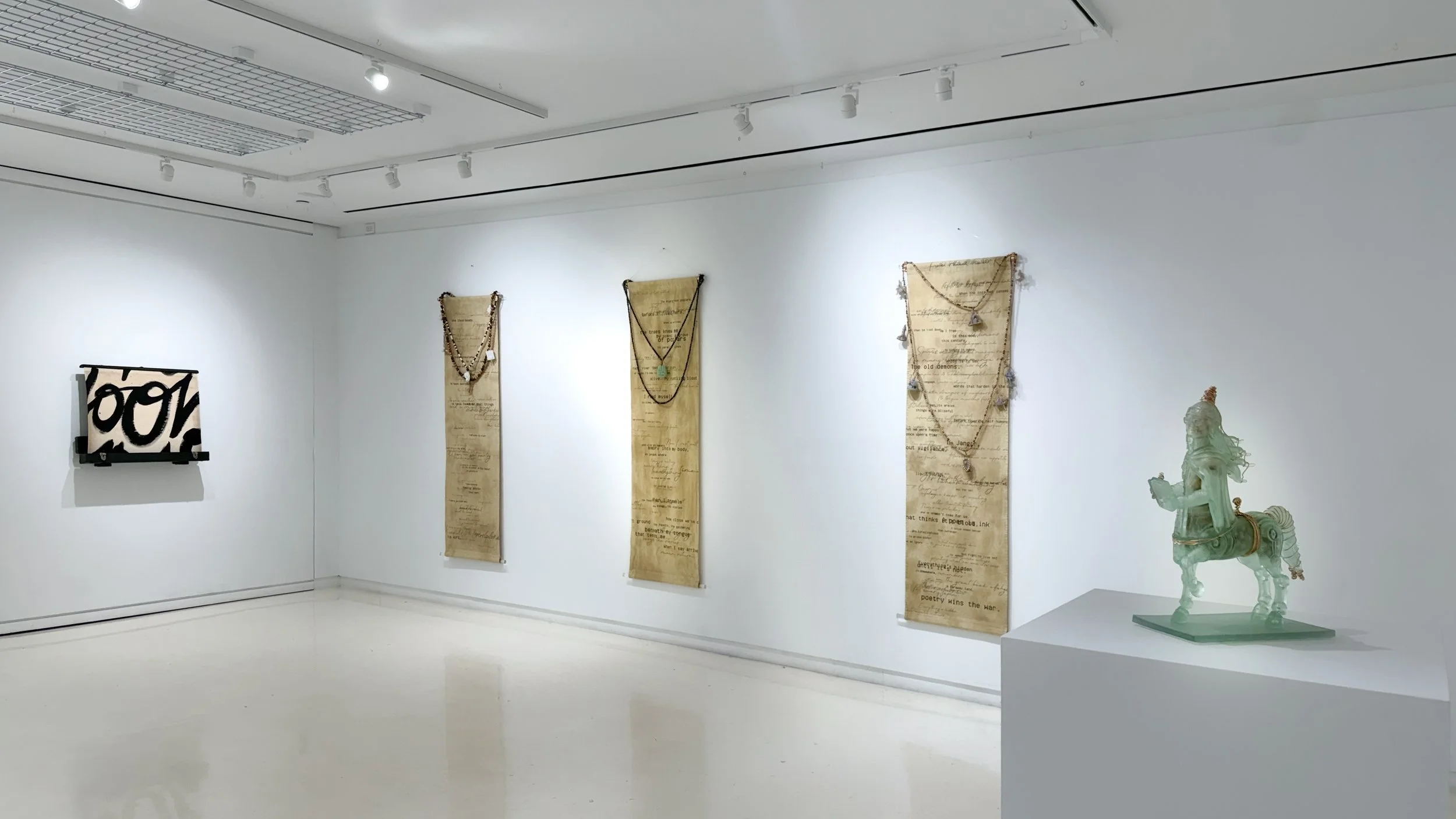
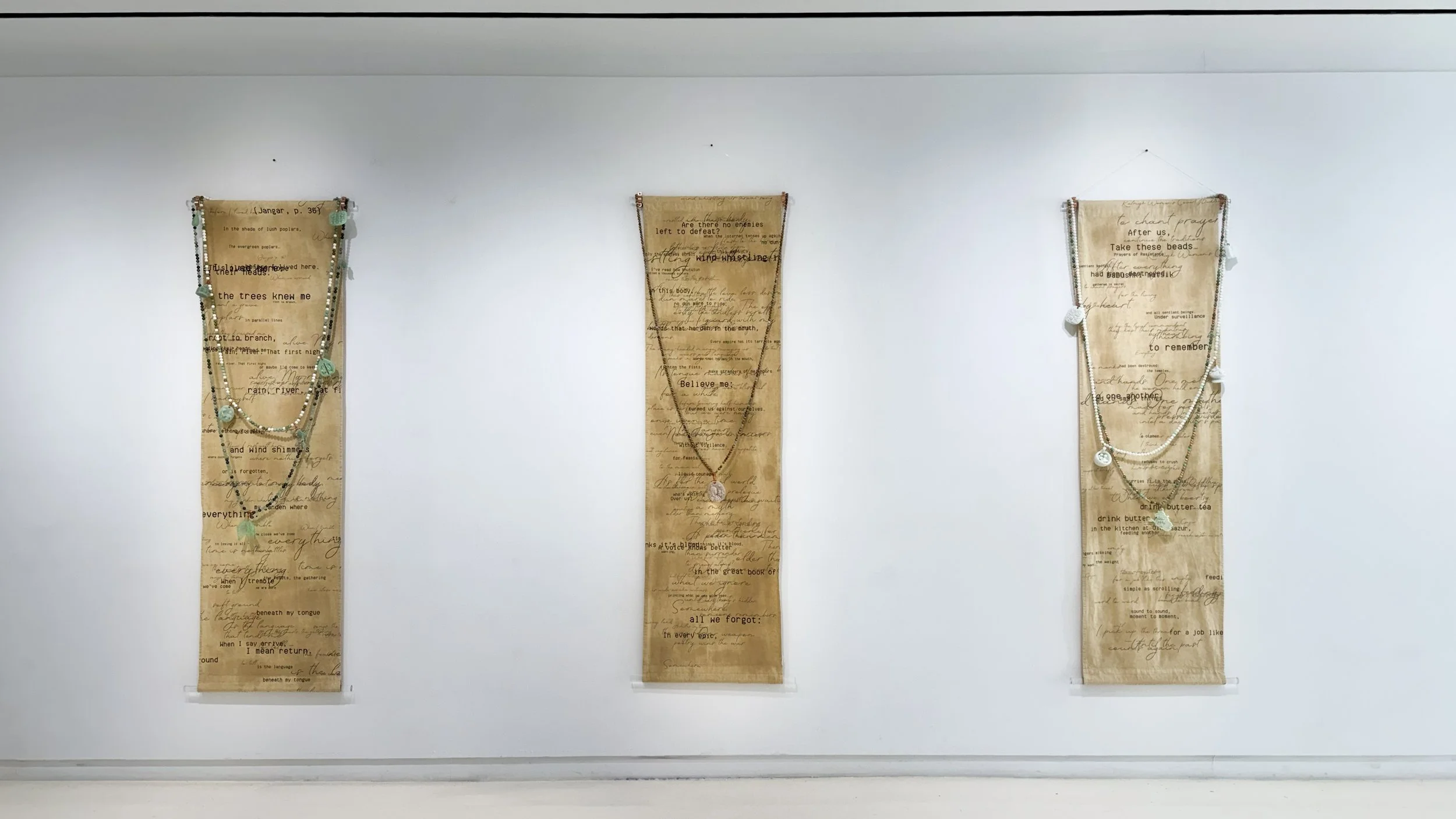
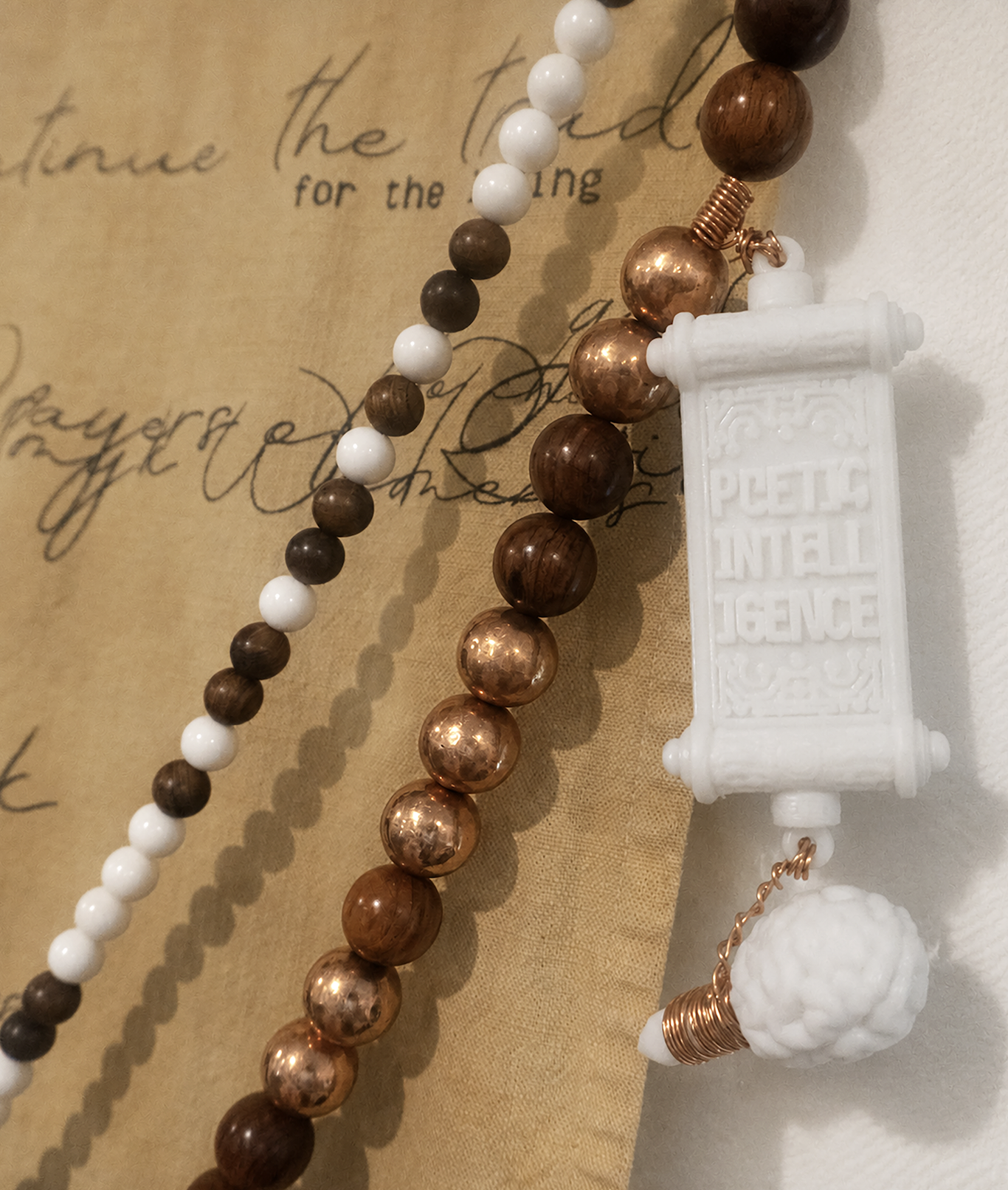
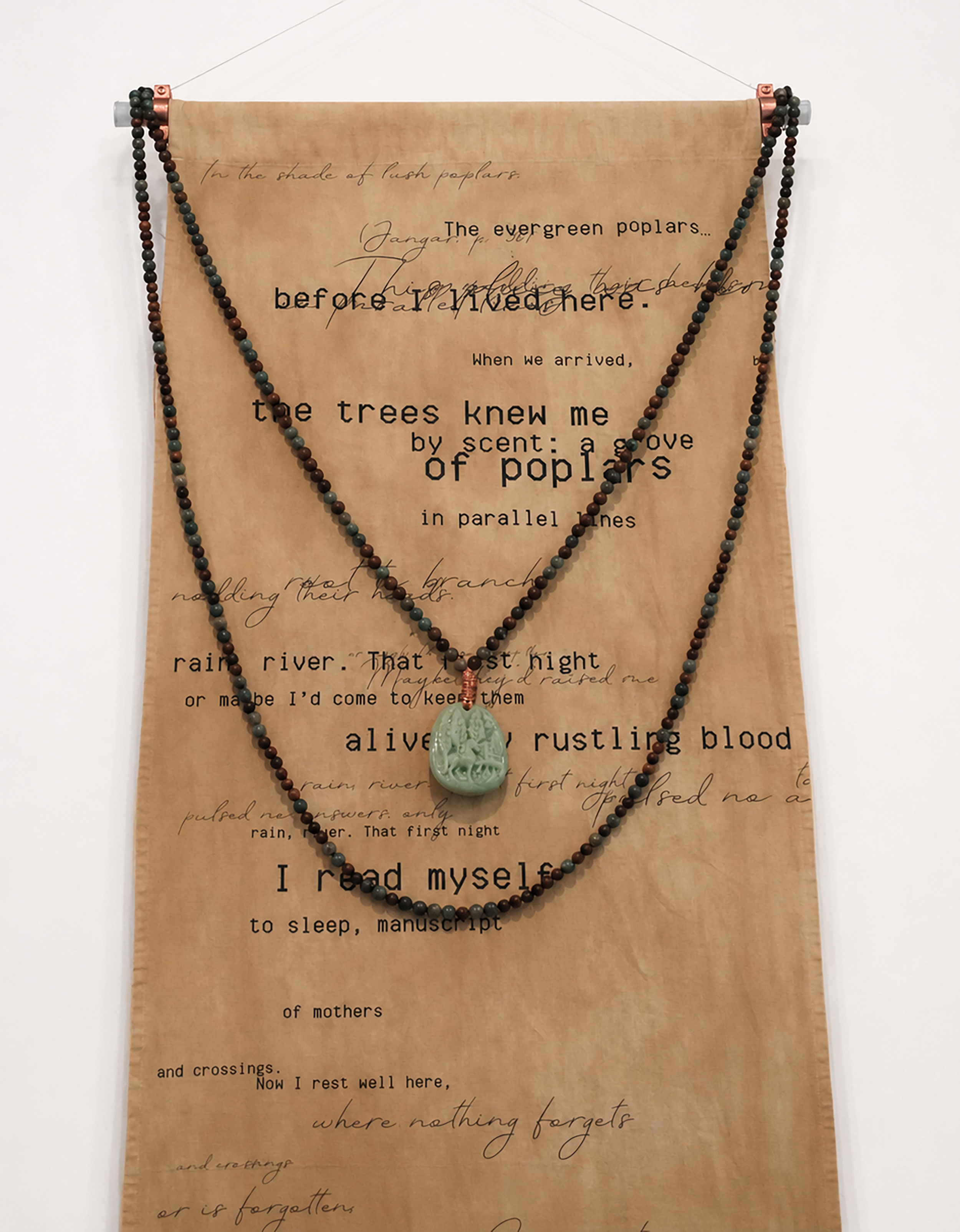
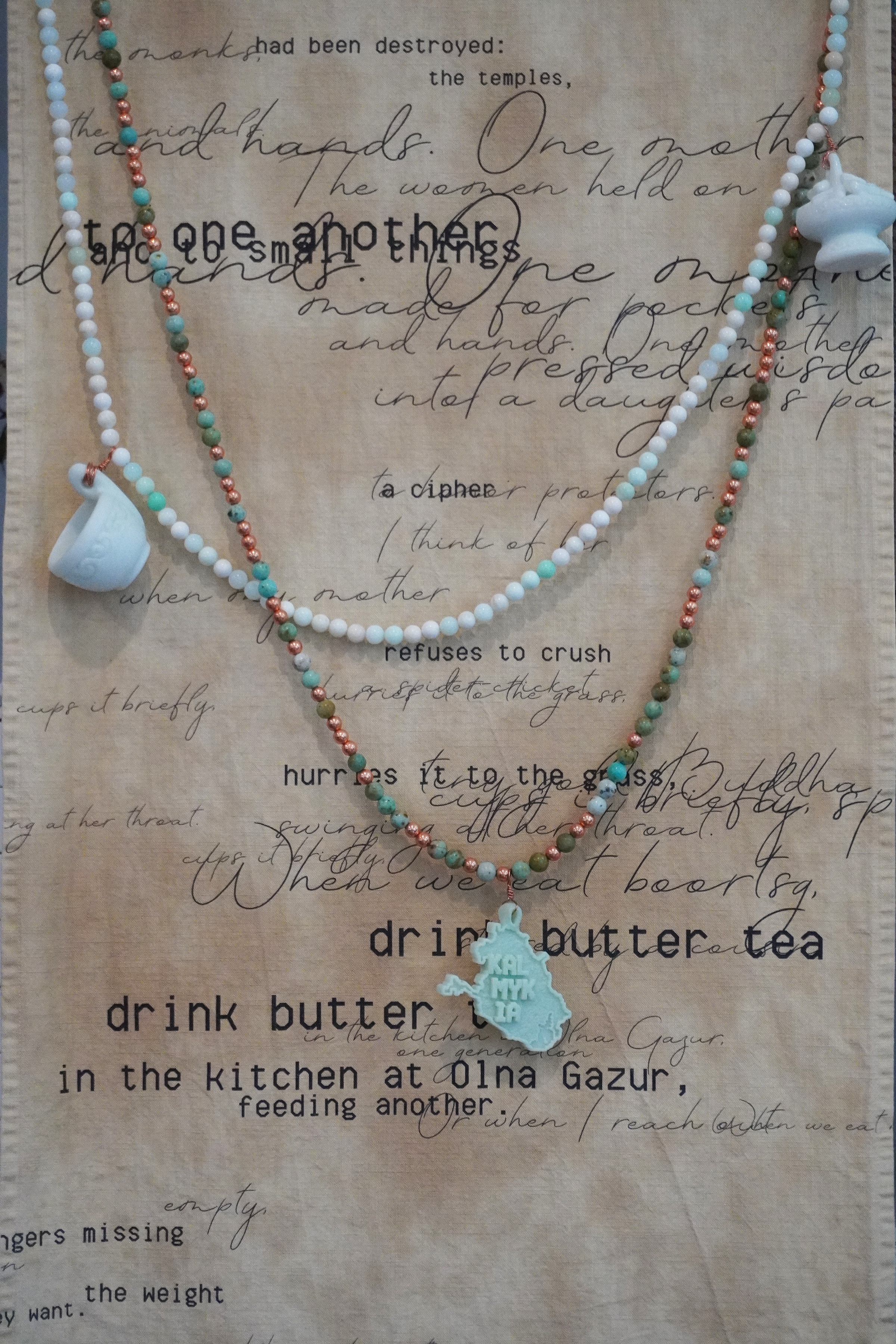
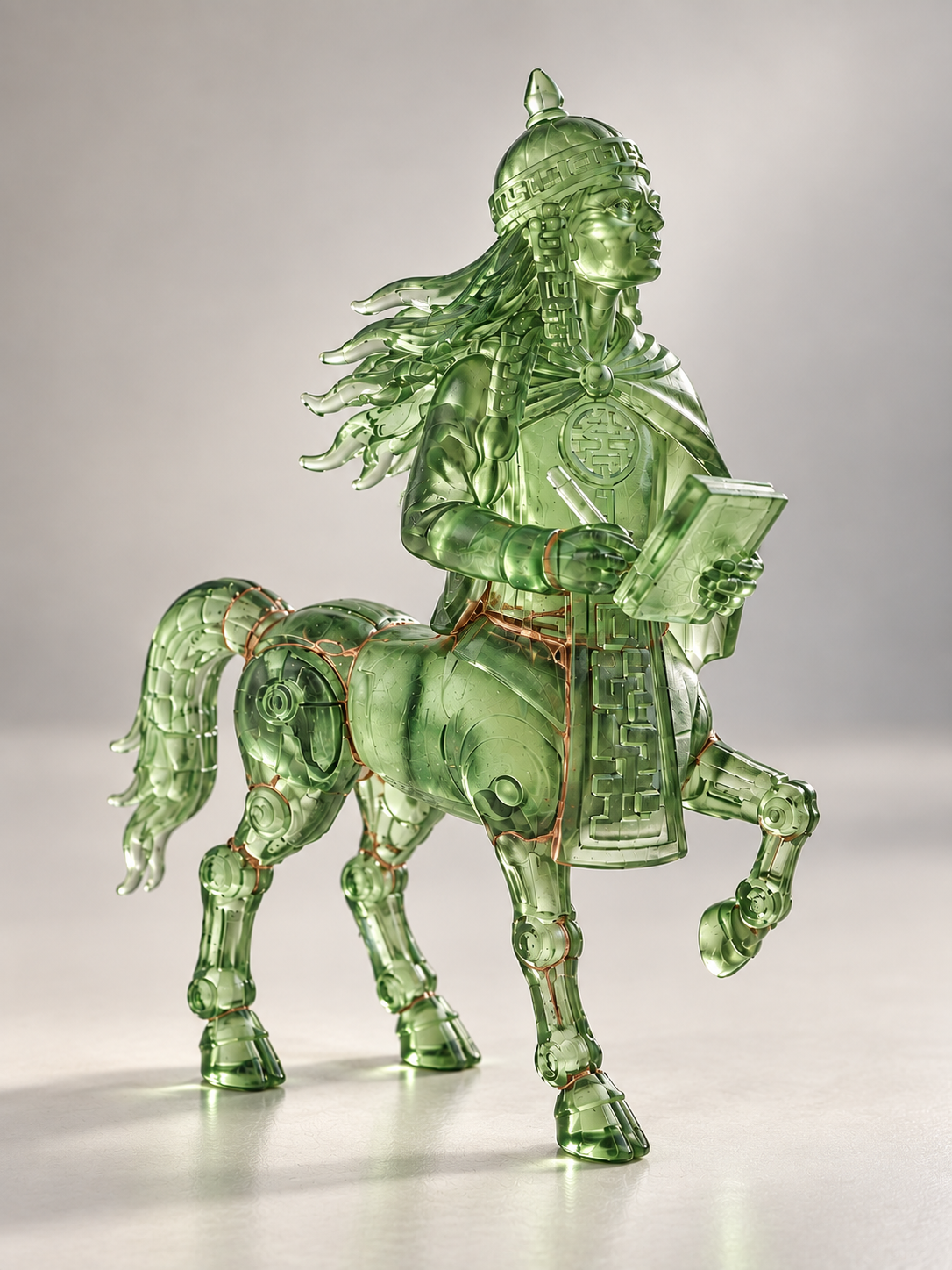

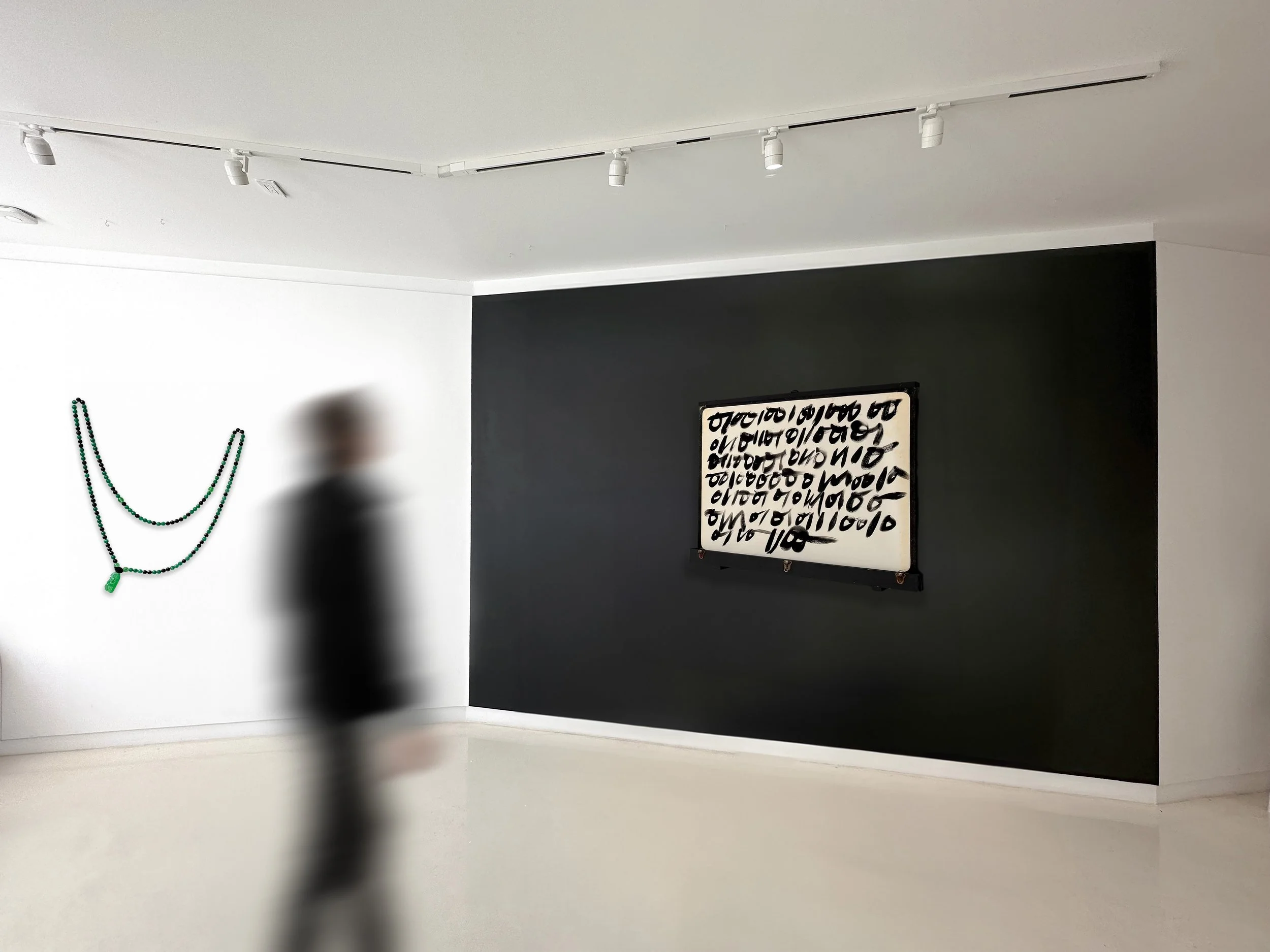
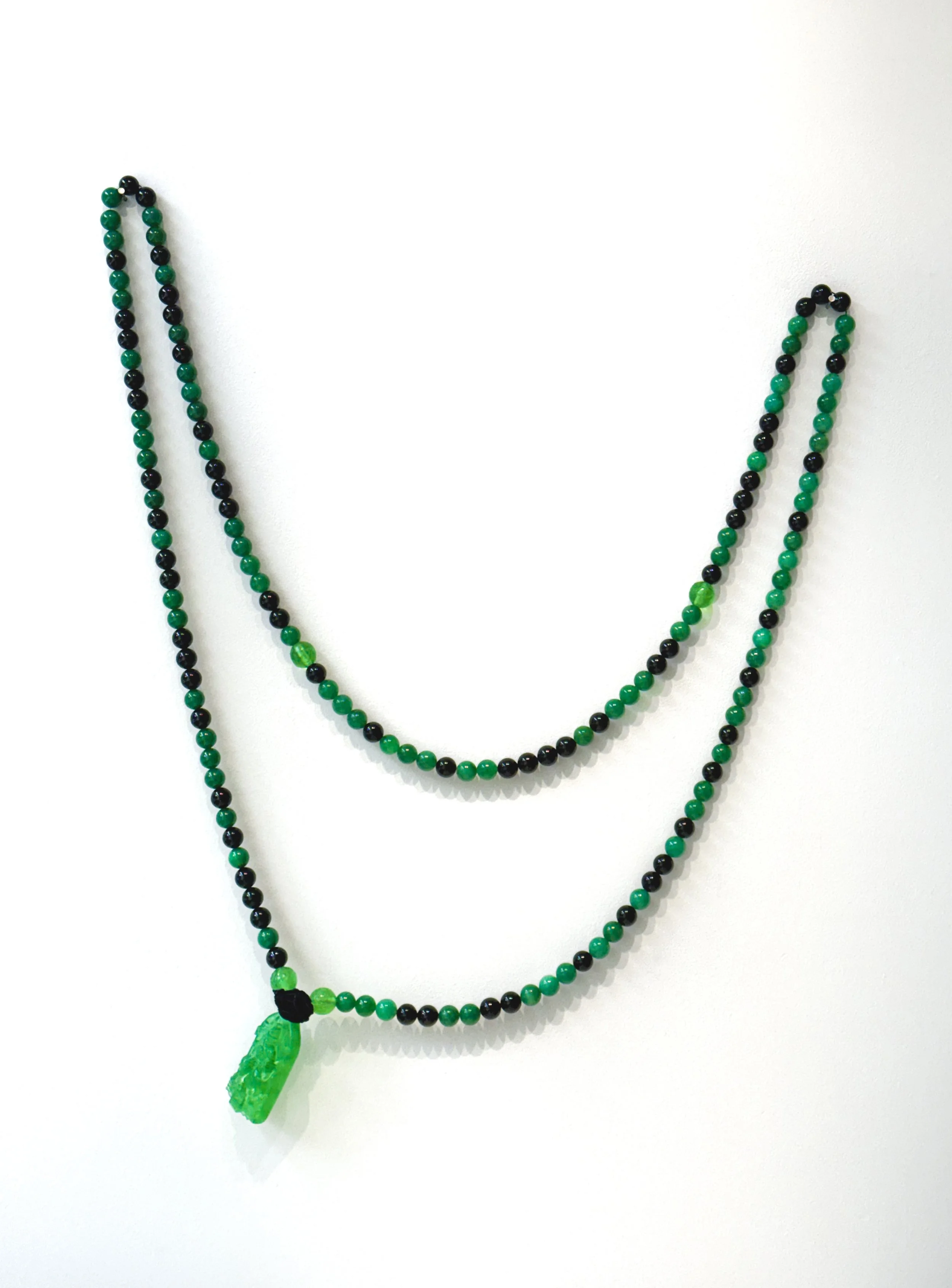
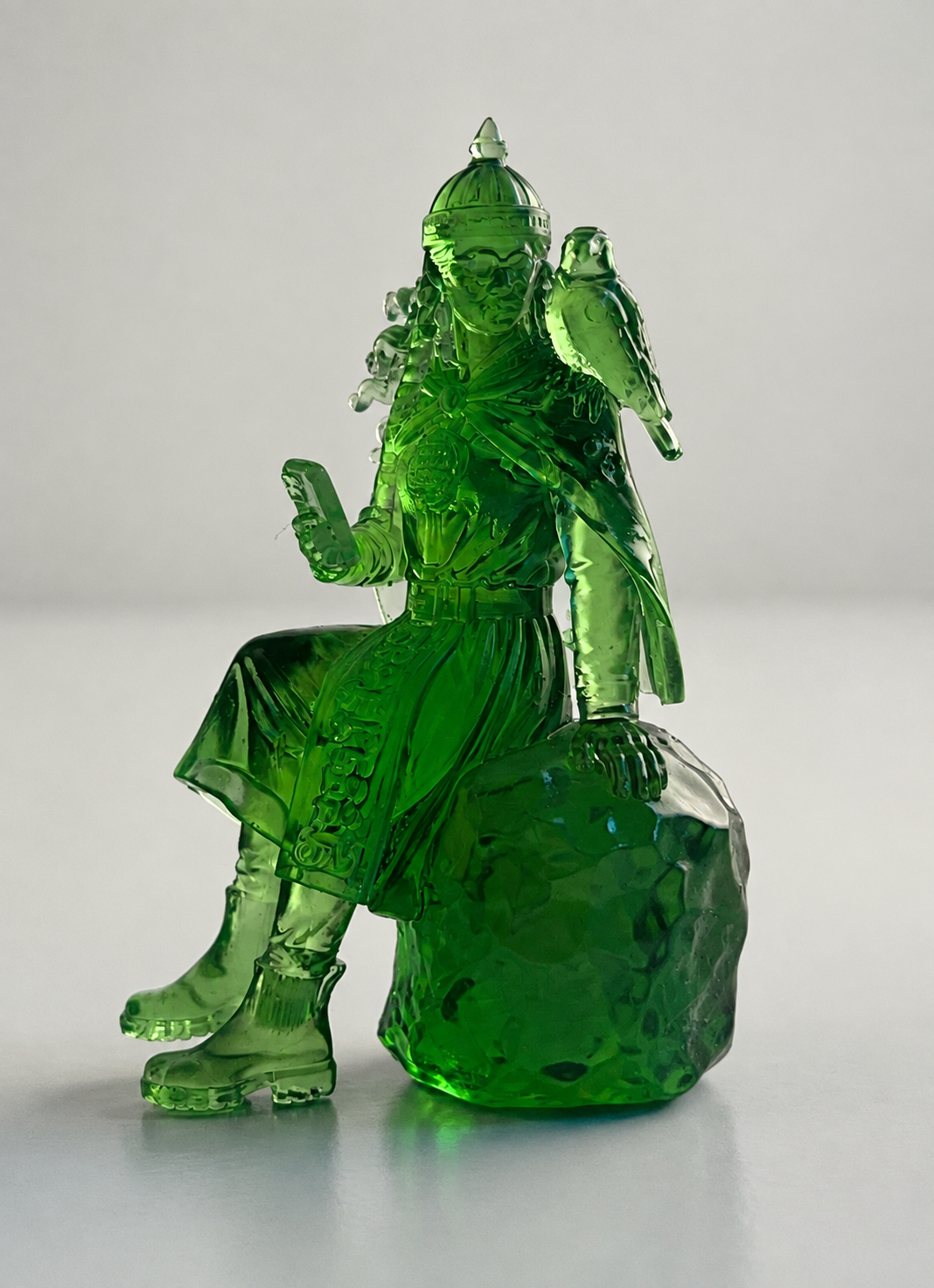
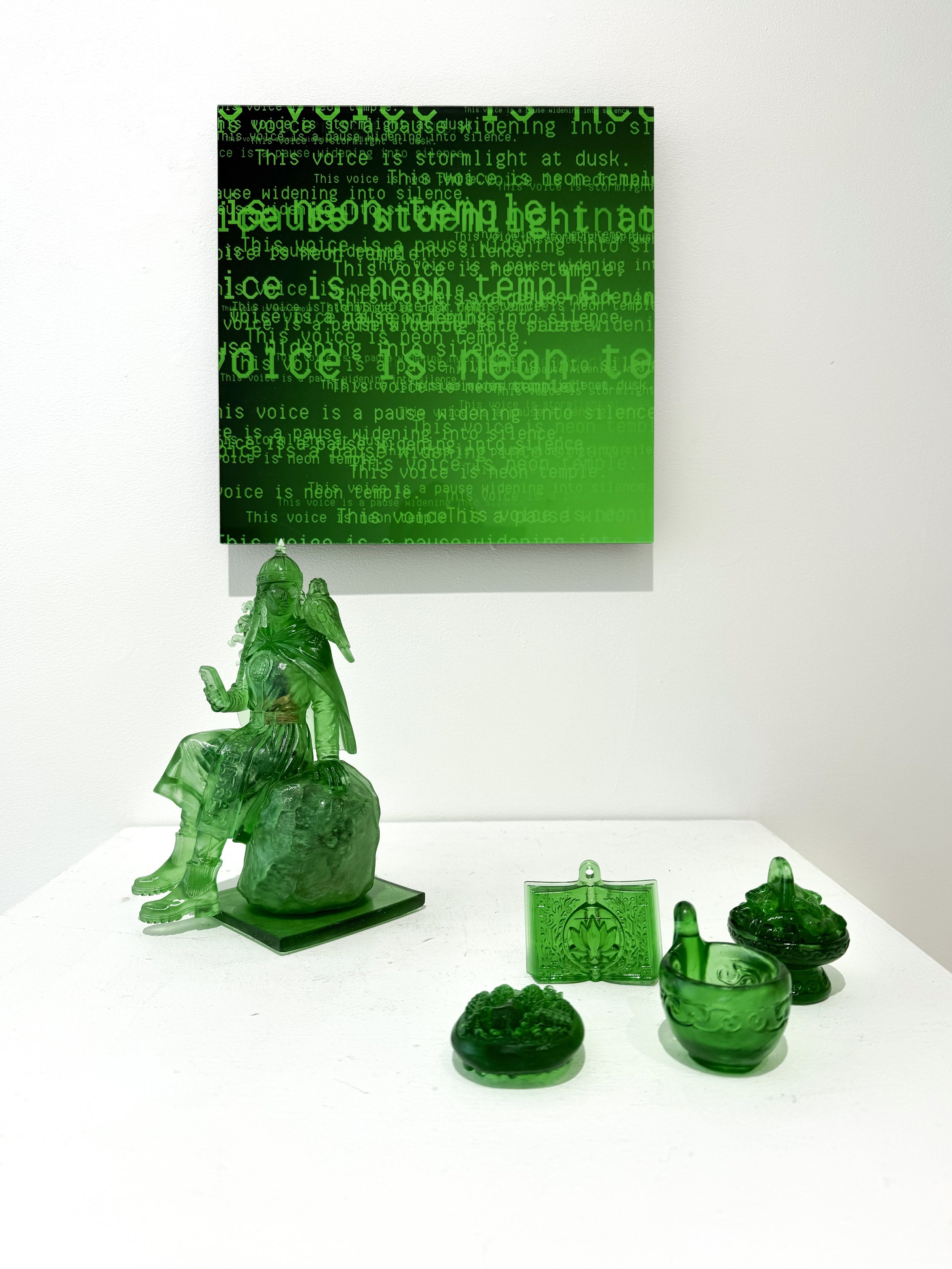
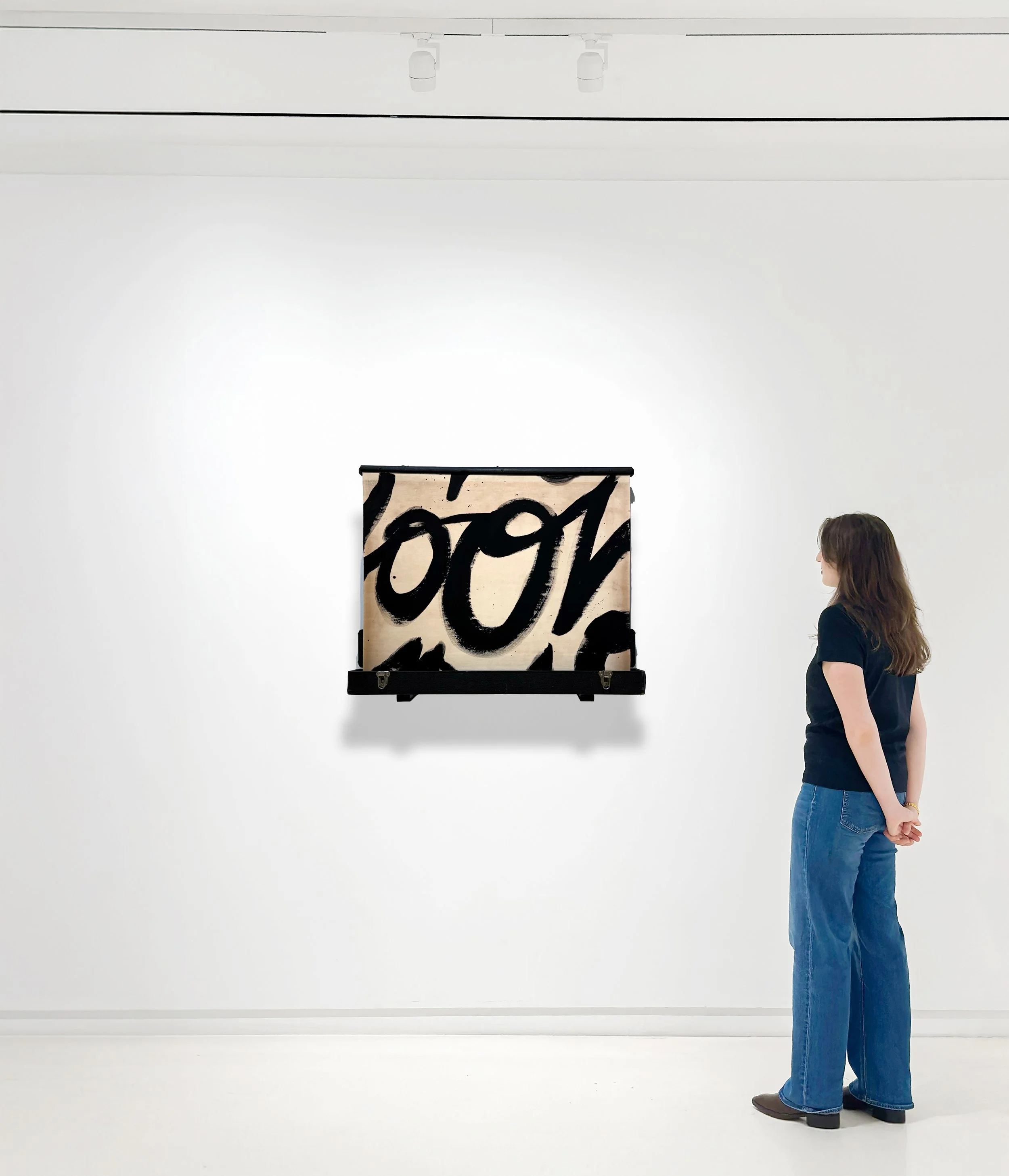
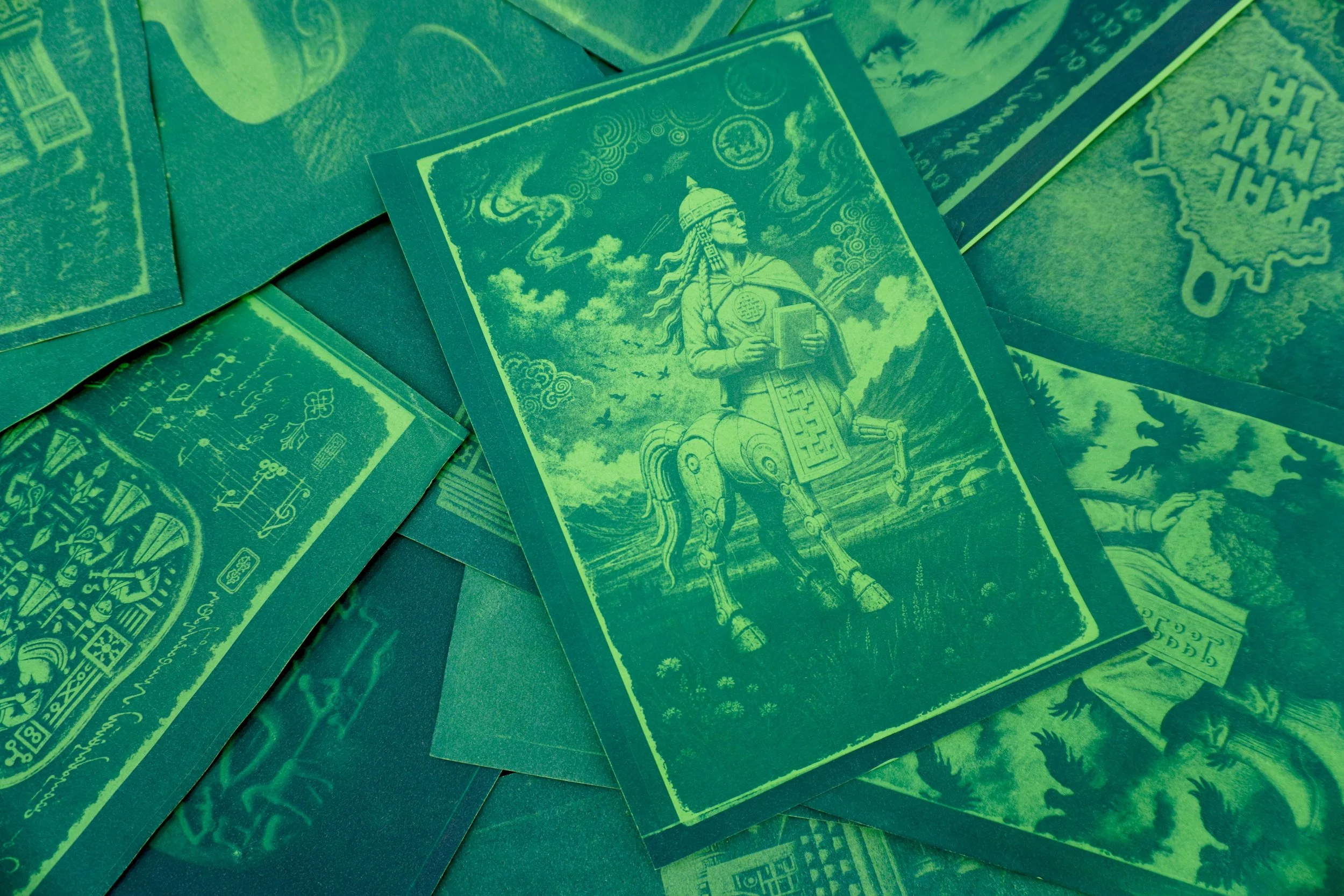

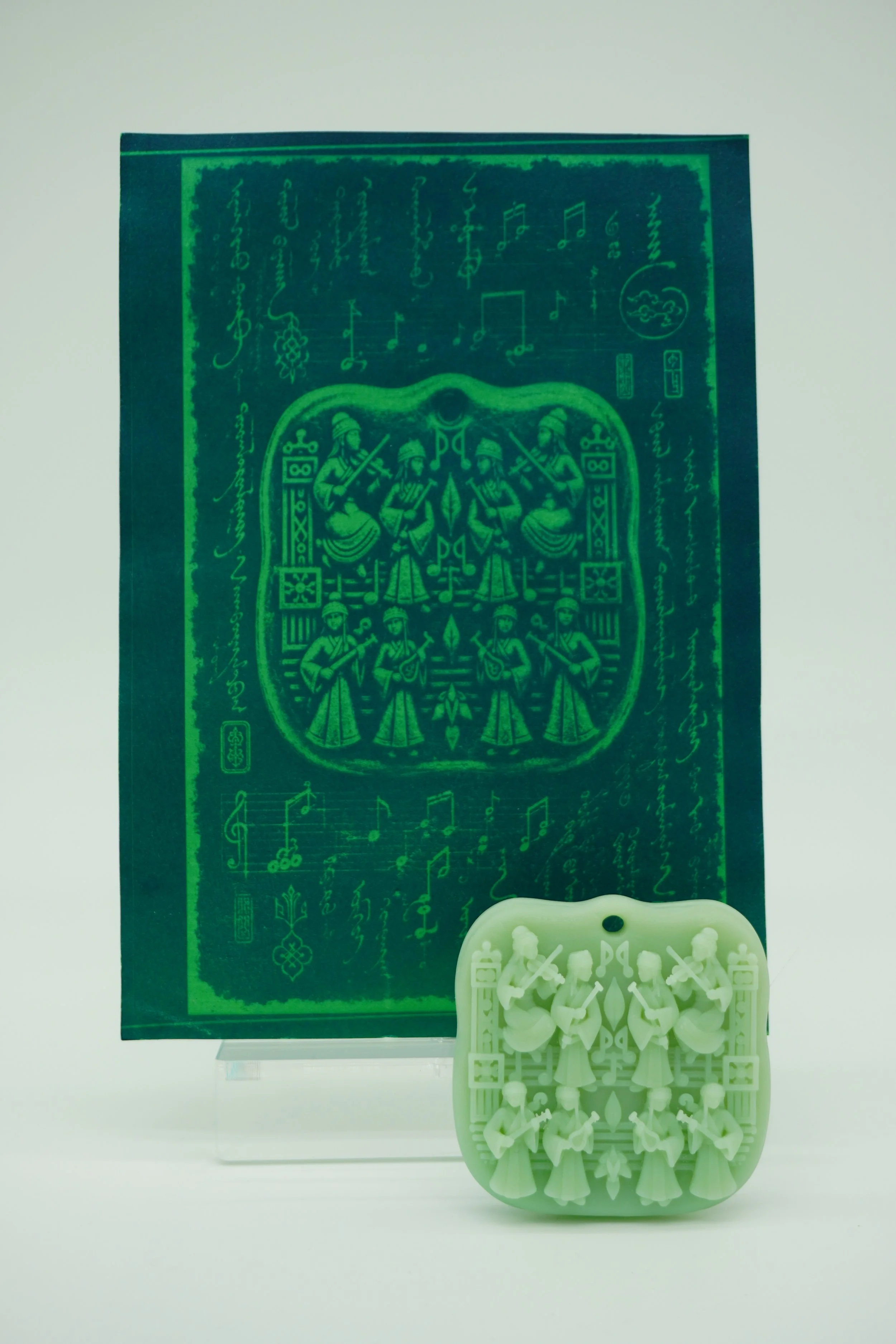
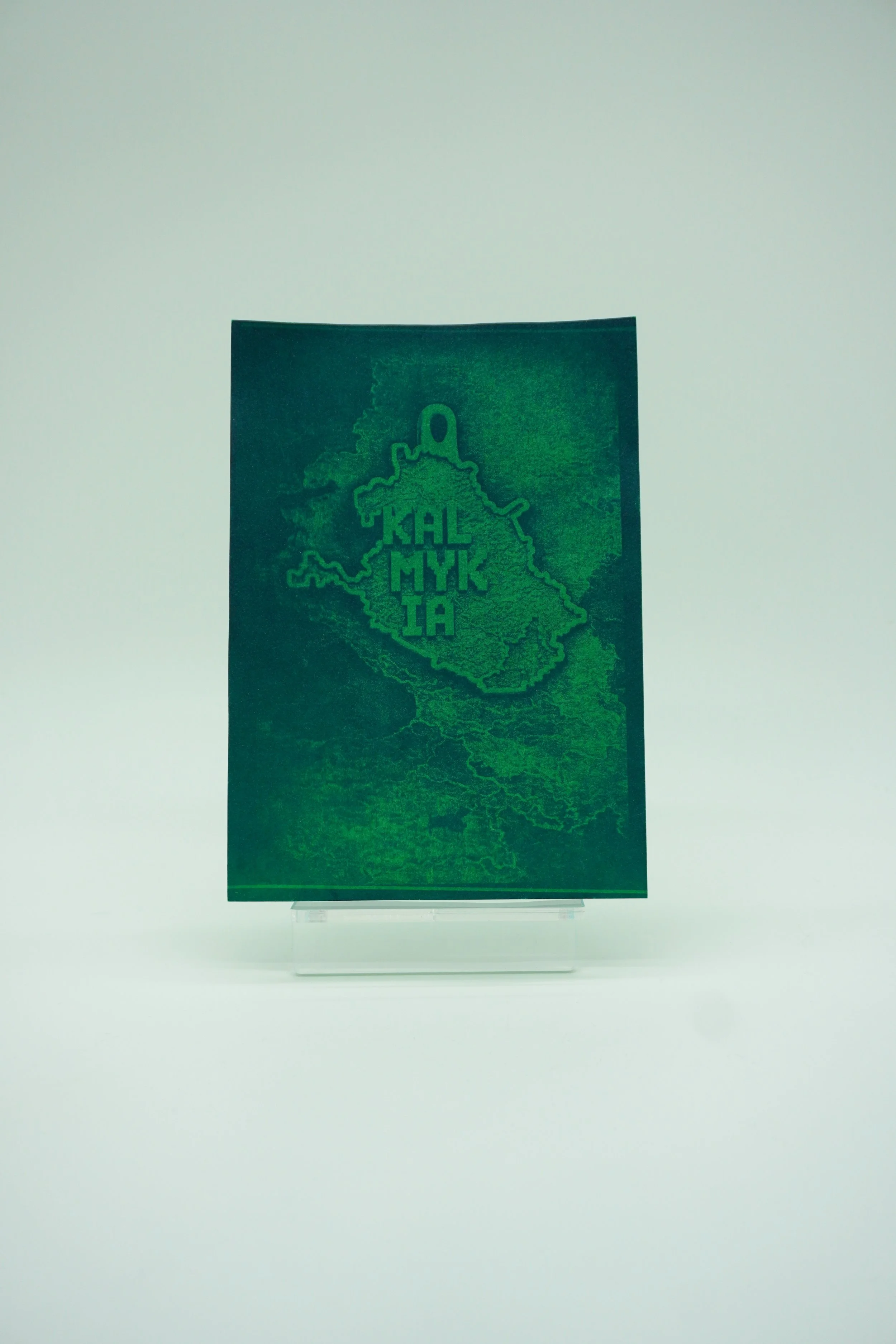
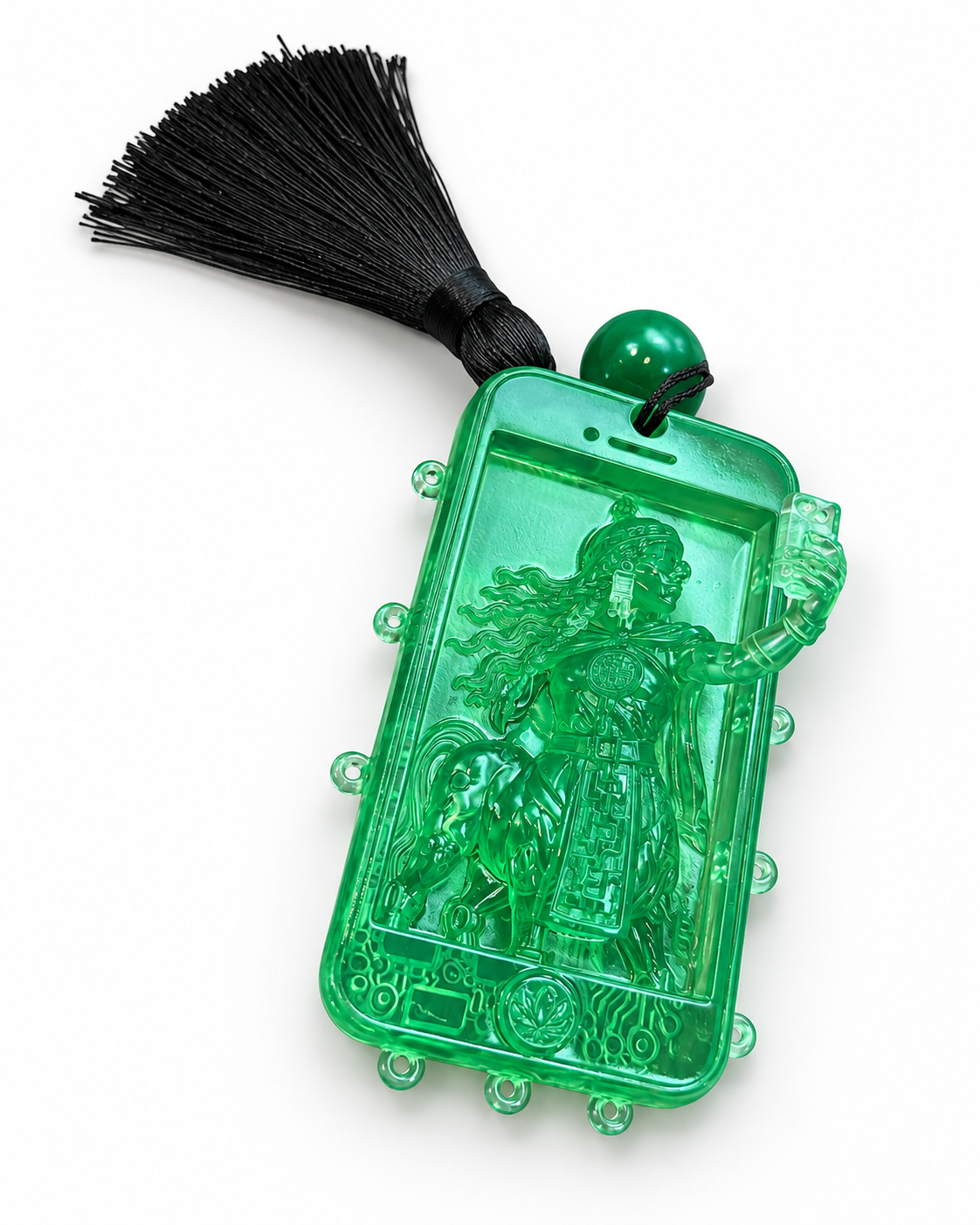
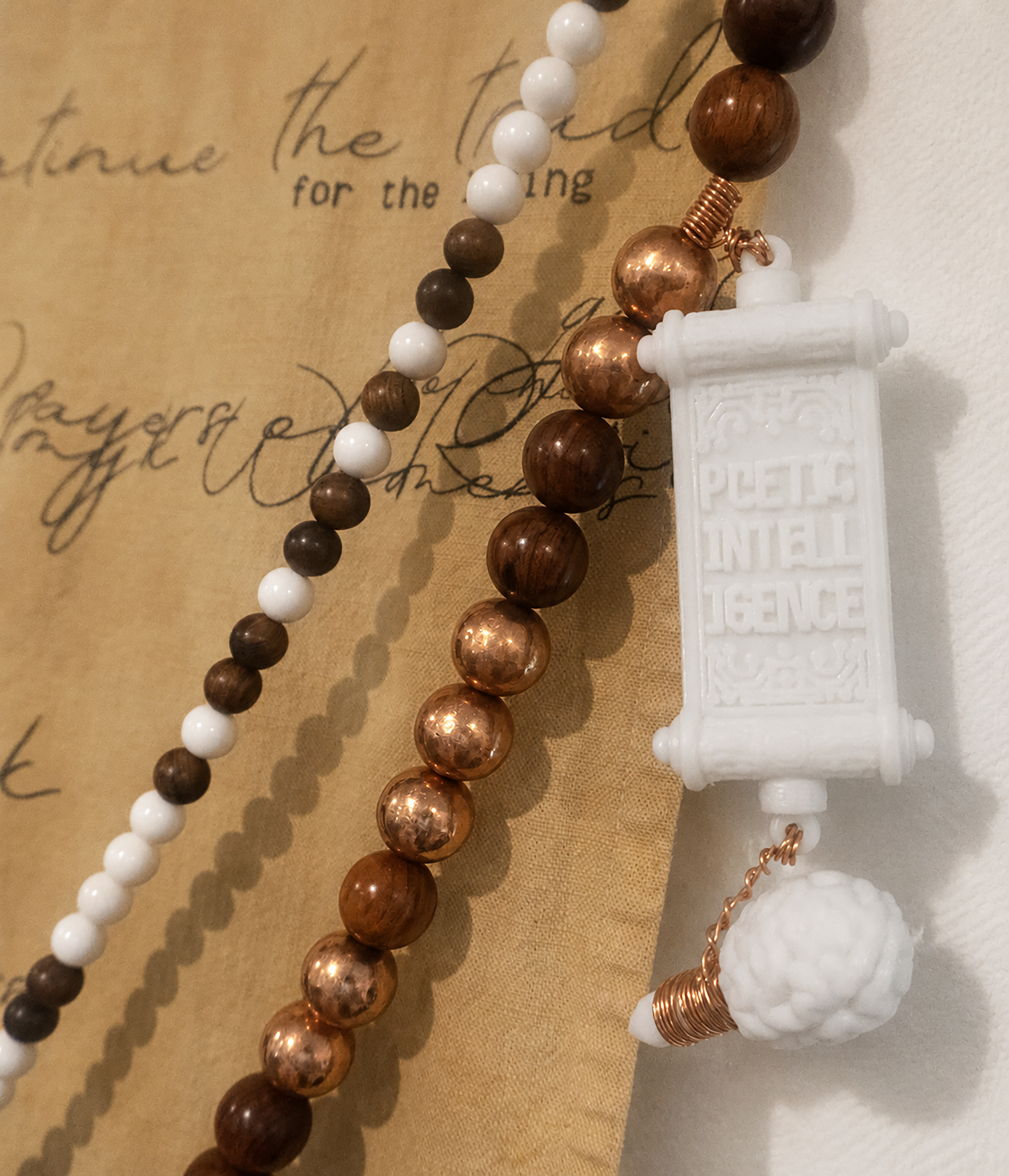
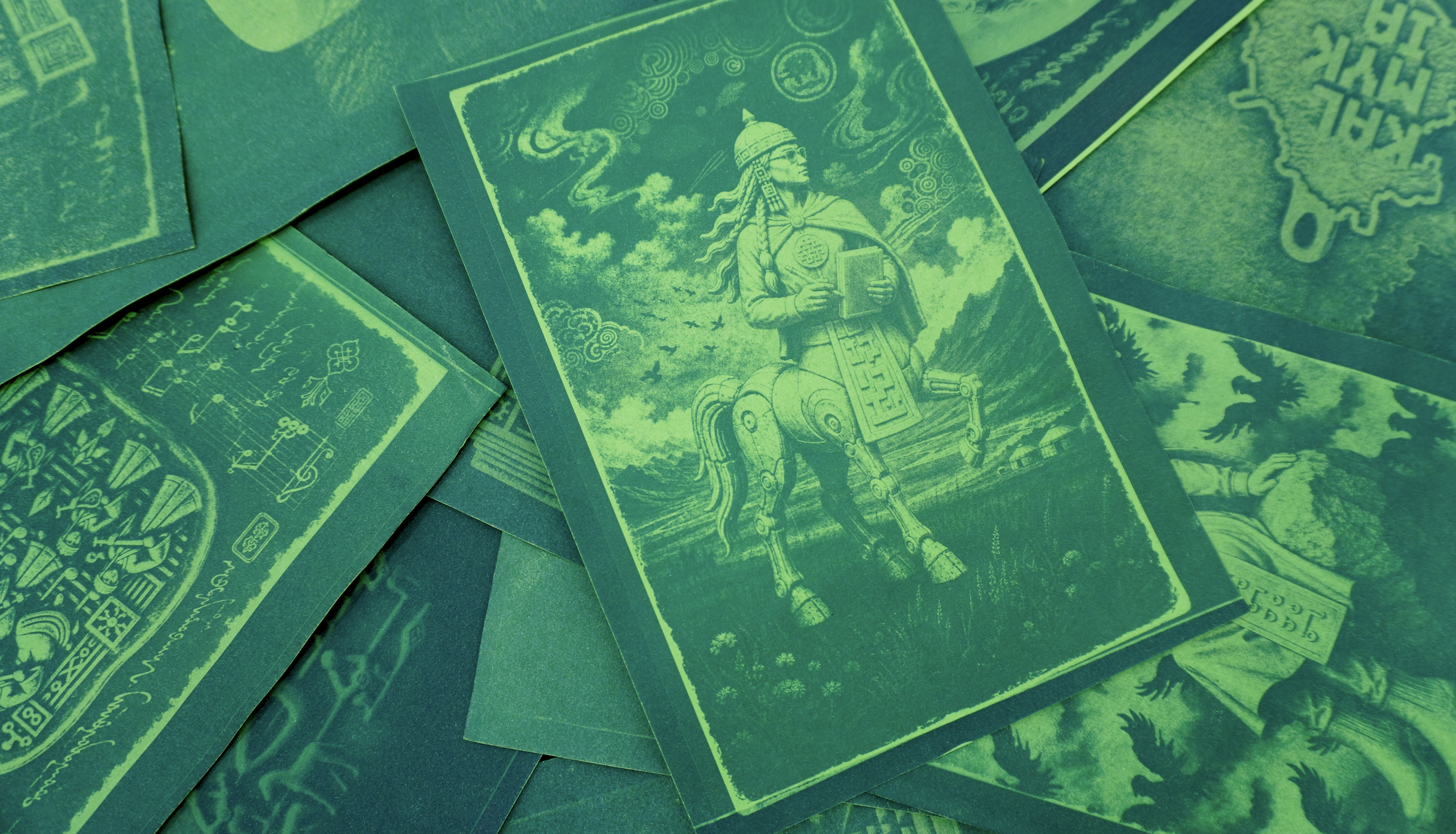
Sapar Contemporary is pleased to present a solo exhibition by Sasha Stiles, a first-generation Kalmyk-American artist and poet. This is the gallery’s first exhibition of works by Stiles, who embarks on a deeply personal exploration of poetry as a technology of inheritance. Drawing on Jangar – a centuries-old Kalmyk-Mongolian epic that has survived migration, persecution, deportation, and diaspora – Stiles returns to a foundational story of her nomadic heritage to consider how language, memory, and culture are carried forward, or fall silent. Working across voice, script, print, code, and generative systems, Stiles continues Jangar's living tradition, using ancient practices of oral transmission, portable memory, and embodied knowledge to offer new ways of understanding our increasingly networked, mobile, and computational world. From original poetry to 3D-printed objects, cyanotypes, encoded beadwork, spoken word, and hybrid scrolls, each translation expands language beyond text, making it something counted, worn, and felt as much as written or read. Underpinning the exhibition is a recurring family of sculptural forms: part personal iconography, part relic, part prototype. Emerging through years of generative imaging and hybrid practice, they have gradually begun to coalesce into a latent alphabet that roams freely across voice, script, print, code, image, and object. Returning language to the realm of the glyph, the symbol, and the talisman as units of meaning, these evolving figures are not illustration but another way of making poetry.
Through her reinterpretations of Jangar, and of poetry, Stiles suggests that today’s technology is not a departure from humanity's oldest creative practices, but the continuation of our long history of encoding, sharing, and renewing knowledge. In turn, the exhibition proposes that humanity's oldest technology – poetic intelligence – may also be among its most relevant today: a portable, highly adaptive system for carrying language, identity, and imagination across time, distance, and generations.
Essay by Cecilia Alemani
A bead is the oldest bit: long before information acquired a name, it already had a shape one could thread — the elemental unit, present or absent along a string, the smallest quantum of difference a hand is able to register. It is precisely on this terrain that Sasha Stiles has built her work, where the art of counting and its computational heir reveal themselves as a single continuous gesture. Her artistic practice is animated by the conviction that the digital did not arrive with the microchip at all, and that coding, tallying, and the storing of meaning in discrete units are among humanity's first motions.
We often think of analog and digital as opposites: the warm, continuous hand set against the cold, discrete machine. Stiles dissolves the polarity at the root of the word itself: digitus, the finger, which implies that to go digital is first of all to count on the fingers. The abacus, the Jacquard loom, the knotted quipu, the rosary recited bead by bead: each of these objects is a digital machine run by an analog hand, and this recognition forms the throughline of her practice, from the ongoing Analog Binary Code and Cursive Binary series to A LIVING POEM, the self-rewriting poem recently presented on a monumental screen at the Museum of Modern Art in New York. Whereas this latter work existed as pure light — endless, placeless, erasing itself every hour — the present exhibition at SAPAR CONTEMPORARY transfers the generative logic off the screen and into the palm, into code one can hold in the hand.
Stiles belongs to a long tradition of artists who have worked against the pure abstraction of the sign. Language has always been a form of abstraction, with signs standing in for the world, and binary code is that abstraction pushed to its limit: a syntax of ones and zeros that carries no meaning in itself. Against this drift, in the 1950s and 60s artists working with Concrete and Visual poetry made the shape and heft of a word carry as much as its sense, and set the letter loose on the page as picture, dance, and constellation: half a century ago Augusto de Campos scattered words across the white background as visual composition and event, and the Fluxus artists, Alison Knowles among them, recast them as instruction, score, and edible object. Mirella Bentivoglio staged an exhibition of women artists at the 1978 Venice Biennale, gathered beneath the title Materializzazione del linguaggio: textual art became a way for these artists to rewrite themselves and their place in history, resisting the silencing of women within a language built by men, what Hélène Cixous would call écriture féminine. While these artists materialized language into shapes and forms, Stiles materializes it into matter one can hold in the hand: when she casts a line of the Kalmyk epic Jangar as beads of turquoise and copper, the abstract sign reacquires a color, a weight, a space in the world.
There is another artistic lineage Stiles rejoins, one that has been quietly written out of the record. The word "computer" belonged first to people rather than to machines, and by the twentieth century the person it named was very often a woman, for the work of calculation was exacting yet poorly paid, the kind an employer would assign to women for far less than a man's wage. Only after the Second World War did the machine inherit the name, and as it did, the women who had carried it slipped from the story, so that Kinetic and Programmed Art came to be imagined almost wholly as the province of engineers and of male authorship. And yet the body kept returning, again and again, through the hands of women: through Vera Molnár, one of the first artists to draw with a computer, who ran her algorithms by hand for years before she had a machine to run them on; through Ulla Wiggen, who painted the interiors of early computers and circuit boards with the gravity of devotional panels; through Charlotte Johannesson, who traded her loom for an Apple II and coded her images to the very pixel grid of the weave, seeing that warp-and-weft and zeros-and-ones are the same binary cloth; and through Marilou Schultz, who wove the shape of an Intel processor back into a Diné rug, returning the microchip to the loom that Navajo women had once been employed to serve. It is in this counter-history that one can locate Stiles’s work, in a tradition that never allowed the digital to pretend it had no flesh.
Stiles’s materials carry this argument into the realm of memory, for a bead is also a way of not forgetting: to thread is to reckon, and to reckon is to retain. Every rosary and every mala is an engine of remembrance: the past is held by hand, and returns to the same worn surface, as the Kalmyk grandmothers understood when they kept their outlawed prayers alive by murmuring them over hidden strings after every book had been taken. Against a present that exhales its memory into a weightless cloud, Stiles chooses the bead — heavy, singular, tactile — and her poem Beads arrives exactly where her practice arrives, "until the past counts again."
What might be mistaken for nostalgia in fact runs in the opposite direction: Stiles is demonstrating that the digital was a craft from the very start, that the bit and the code were born in the hand and never truly left it. The digital returns to the digit, and what she fashions from it is a form of poetic intelligence, a meaning that never sheds its body, sustained by the belief that whatever we take the trouble to touch is, in the end, what we manage to keep.
About Artist
Sasha Stiles is a first-generation Kalmyk-American artist and poet of Oirat-Mongol descent whose work uses language to explore what it means to be human in a more-than-human age. A leading voice of the generative era, she advances poetry as a vital artistic medium and enduring technology of memory and consciousness — a form of poetic intelligence that bridges emotion and algorithm, intuition and logic, flesh and code.
Working across immersive installations, generative systems, artist books, publications, physical objects, and live performance, Stiles traces a throughline from ancient traditions of orality and inscription to the technocultural landscape of the twenty-first century. Her practice centers language at a moment of profound transformation, as it evolves from mass media into a networked, recursive, and increasingly synthetic environment. Engaging both the exhilaration and unease of this shift, she uses poetry to distill meaning from noise, interrogating language as both a flawed interface and a powerful force for connection, collaboration, and survival.
Since 2018, Stiles has worked closely with artificial intelligence as both subject and collaborator, developing hybrid creative systems that expand the possibilities of authorship and expression. Her landmark collection Technelegy (2021), created in dialogue with a personalized AI model, helped define a new paradigm for human-machine co-creation. Subsequent projects — including Cursive Binary, Repetae, Heart Mantras, and A Living Poem — position AI not as spectacle, but as a continuation of humanity’s oldest linguistic impulses, while probing its ethical and existential implications.
Recognized for its clarity, emotional resonance, and conceptual rigor, Stiles’ work offers new ways to think, feel, and make meaning in a rapidly changing world. Her projects have been exhibited and performed internationally at venues including the Museum of Modern Art, Art Basel, Lincoln Center, and Outernet London. She is the recipient of honors including the Prix Ars Electronica and the Lumen Prize, and her work has been featured in The New York Times, Artforum, Poets & Writers, and NPR. Stiles has collaborated with cultural and technology partners including Google Arts & Culture, Gucci, Bang & Olufsen, and Monument Lab. A graduate of Harvard and Oxford and co-founderof theVERSEverse, she has also served as a longtime poetry mentor to the humanoid android BINA48, reflecting her deep engagement with diverse forms of intelligence. She lives and works near New York City with her husband and studio partner, Kris Bones.
About Writer
Cecilia Alemani is an Italian curator based in New York. Since 2011, she has been the Donald R. Mullen, Jr. Director & Chief Curator of High Line Art, the public art program presented by the High Line in New York. Over her fourteen-year tenure, she has overseen major commissions by many of today’s most influential artists and spearheaded the High Line Plinth, a landmark program for monumental contemporary sculpture. Her practice is committed to realizing first-time public projects by artists who have not previously worked at this scale or within the complexities of the urban landscape. In 2025, she curated Once Within A Time, the 12th SITE Santa Fe International, which for the first time in the biennial's history extended its presentation across fourteen partner institutions and unconventional venues across the city of Santa Fe. From 2020 to 2022, she served as the Artistic Director of the 59th Venice Biennale, where she curated the acclaimed exhibition The Milk of Dreams, which was visited by over 800,000 visitors. She previously served as the curator of the Italian Pavilion at the 57th Venice Biennale in 2017. Her leadership roles also include serving as the Artistic Director of the inaugural edition of Art Basel Cities: Buenos Aires in 2018.
In recent years, Alemani has curated several exhibitions, including Willem de Kooning – Endless Painting (2025) and Tetsuya Ishida: My Anxious Self (2023), both at Gagosian Gallery in New York. She organized Making Their Mark, the first public presentation of the Shah Garg Collection, a major exhibition showcasing the works of more than 80 women artists from the last eight decades, which traveled to 548 West 22nd Street, New York (2023), the Berkeley Art Museum and Pacific Film Archive (2024), the Kemper Art Museum, St. Louis (2025), and the National Museum of Women in the Arts, Washington D.C. (2026). Additionally, she curated Anu Põder: Space for My Body at Muzeum Susch, Switzerland (2024), the first solo exhibition of the artist’s work presented outside Estonia. Over the past twenty years, Alemani has developed an expertise in commissioning and producing ambitious artworks for public space and unconventional sites, consistently challenging the traditional boundaries between art, architecture, and the urban fabric.
Quisque iaculis facilisis lacinia. Mauris euismod pellentesque tellus sit amet mollis.