
The Silent Syllables of Winter
Emma Kathleen Hepburn Ferrer (US/Italy), Marisa Morán Jahn (US), Mizue Sawano (Japan/US), Sofia Cacciapaglia (Italy) and Gabriela Albergaria (Portugal/Belgium)
November 20, 2026 – January 2, 2027
Opening Friday November 20, 5-7 pm
Artist reception Friday December 11, 6-8 pm
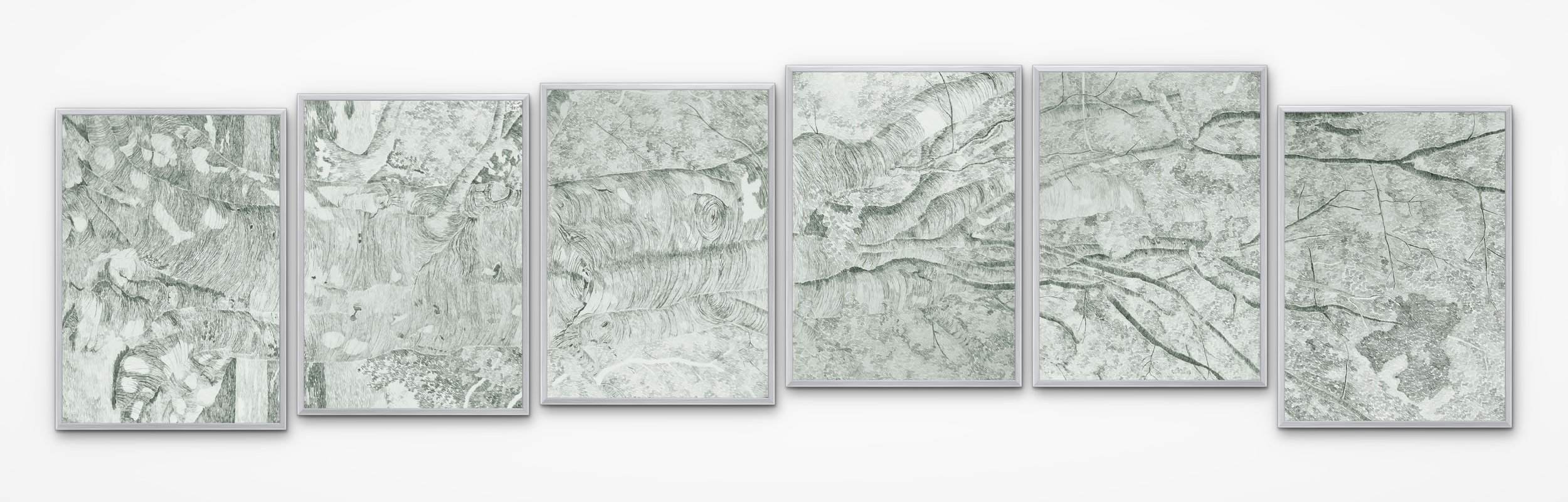
This is the poem of the air,
Slowly in silent syllables recorded;
This is the secret of despair,
Long in its cloudy bosom hoarded,
Now whispered and revealed
To wood and field.
Henry Wadsworth Longfellow
Sapar Contemporary is pleased to present The Silent Syllables of Winter, a group exhibition of gallery artists Emma Kathleen Hepburn Ferrer (Italy), Marisa Morán Jahn (US), Mizue Sawano (Japan/US), Sofia Cacciapaglia (Italy) and Gabriela Albergaria (Portugal/Belgium). The title is inspired by Henry Wadsworth Longfellow's lines on the sounds and silences of winter.
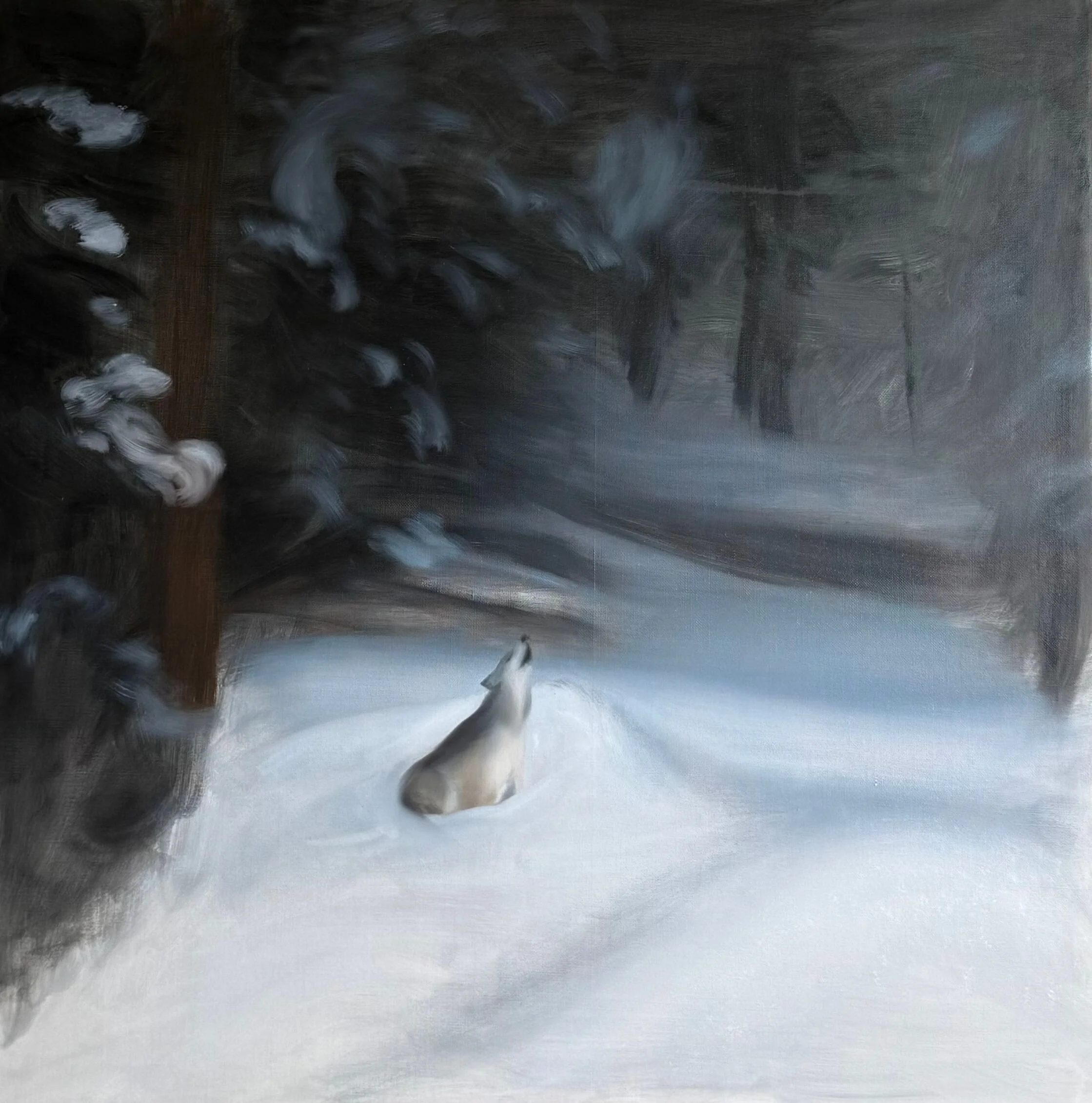
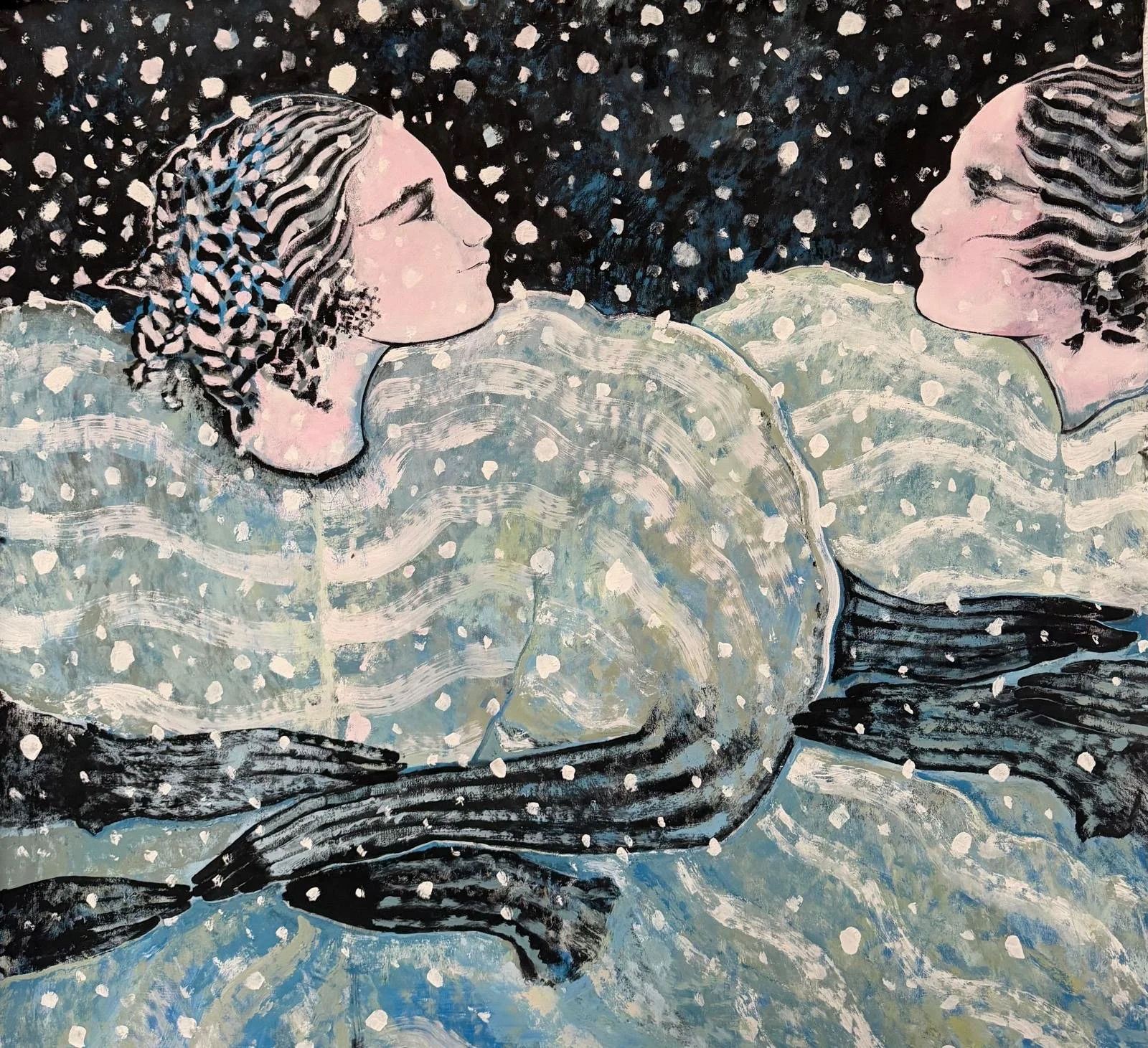
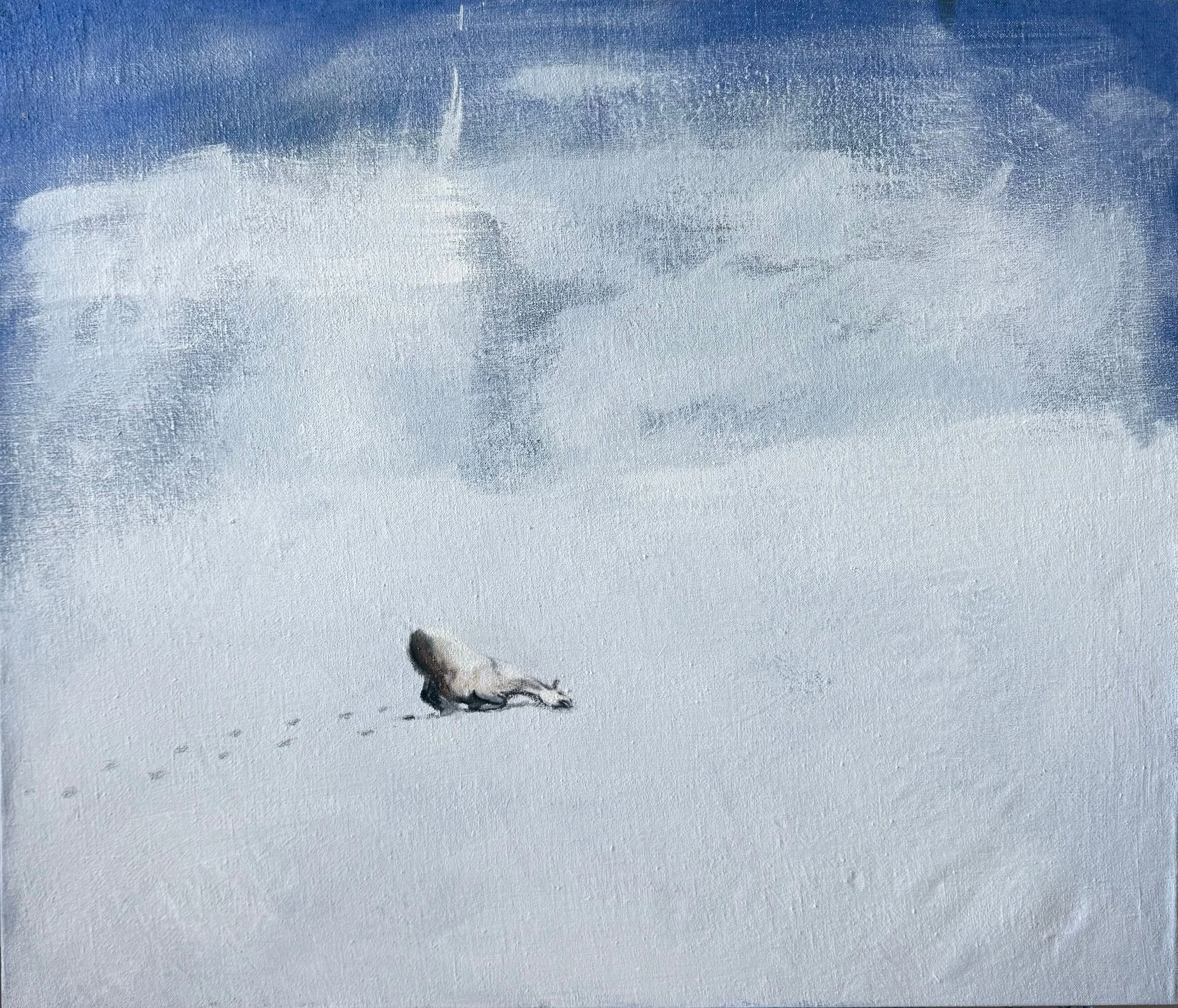
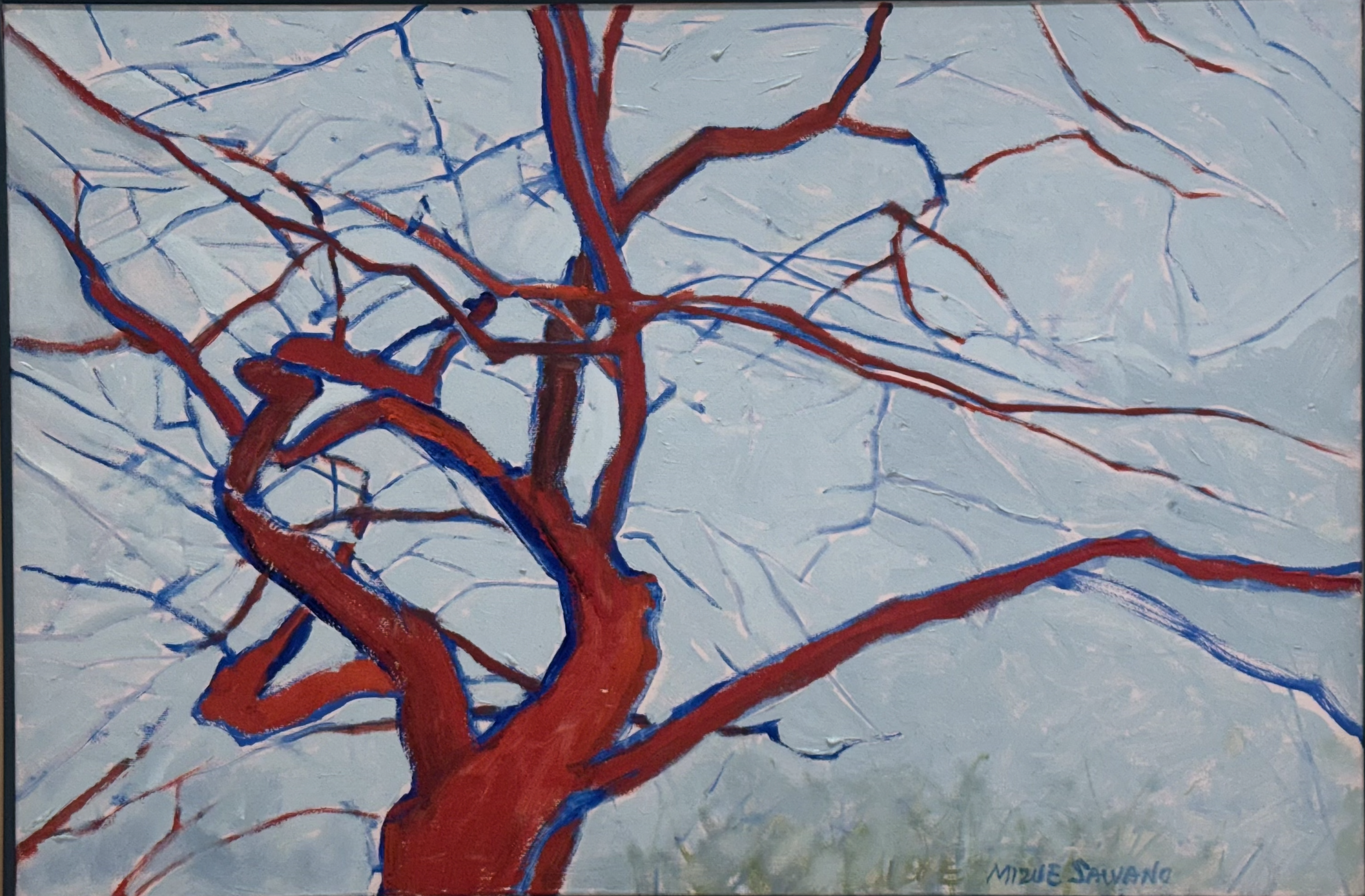
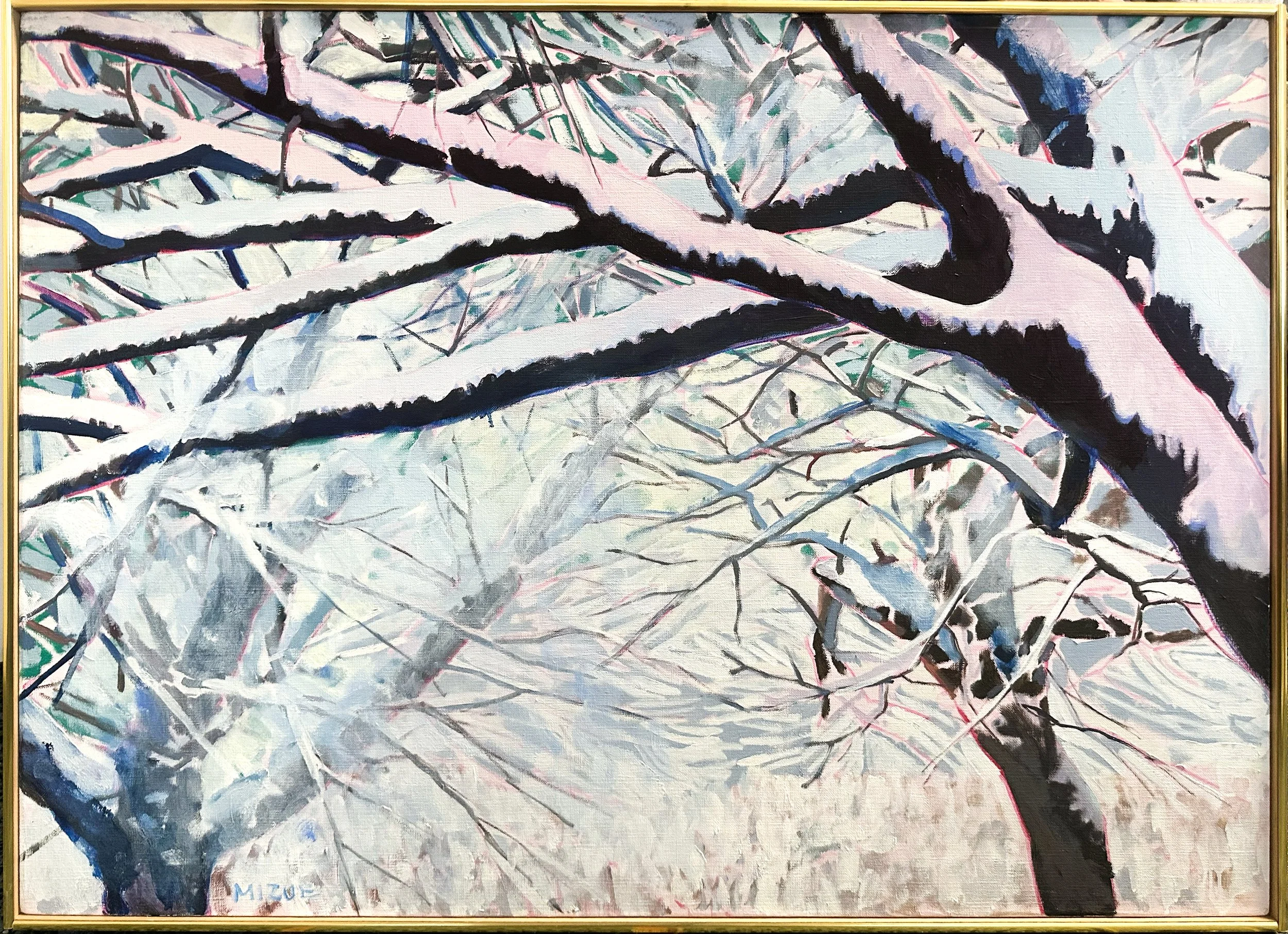
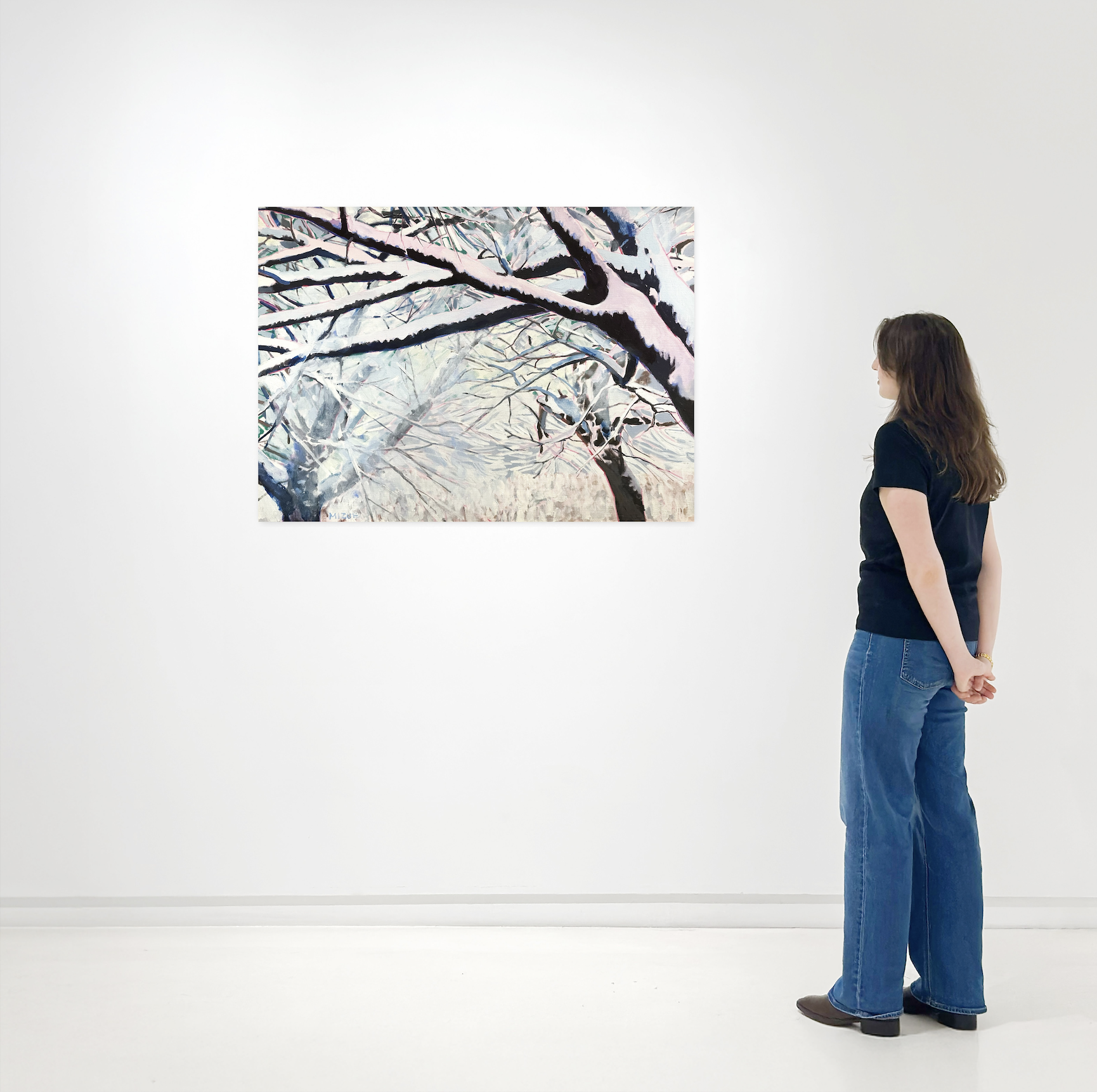
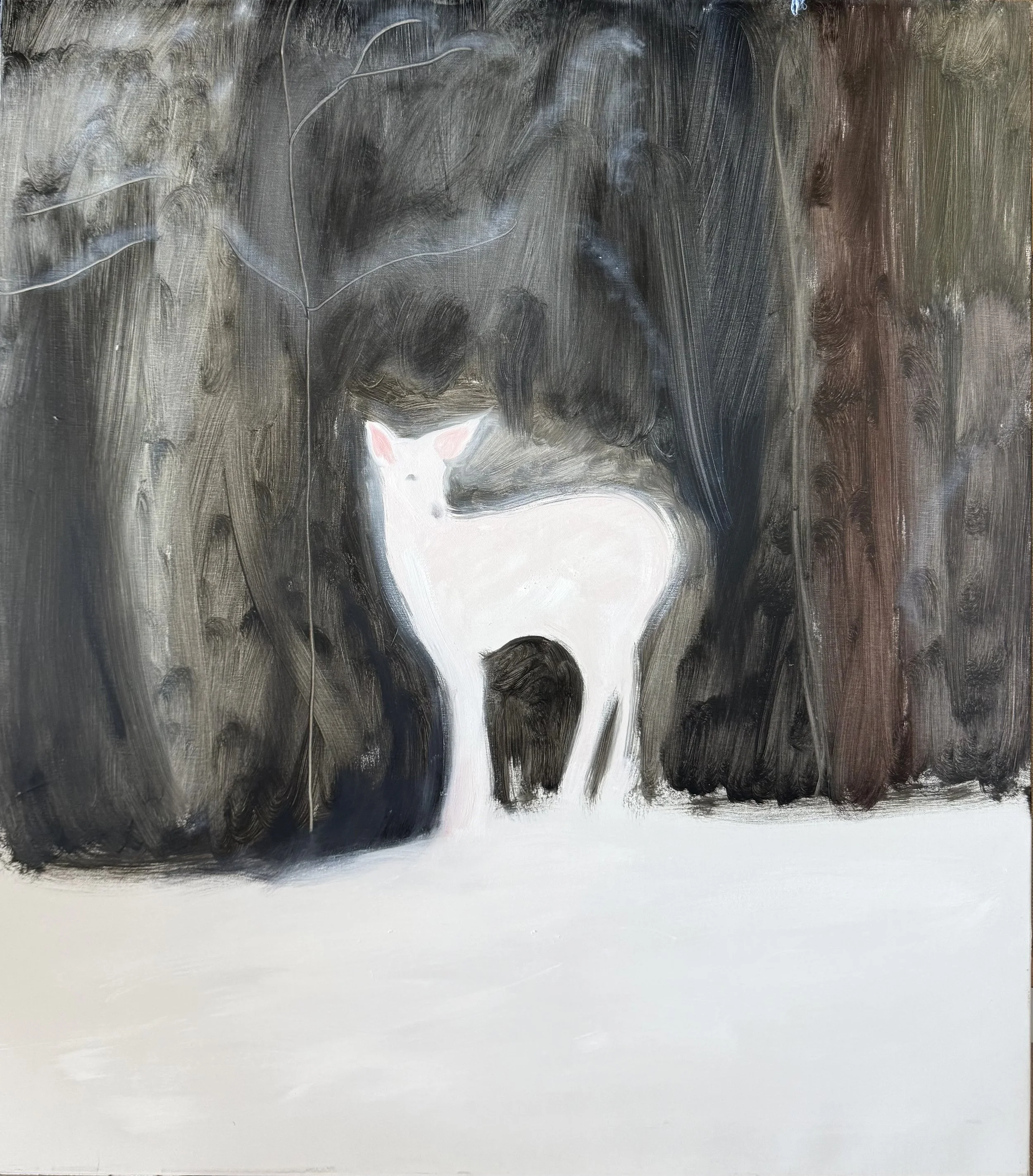
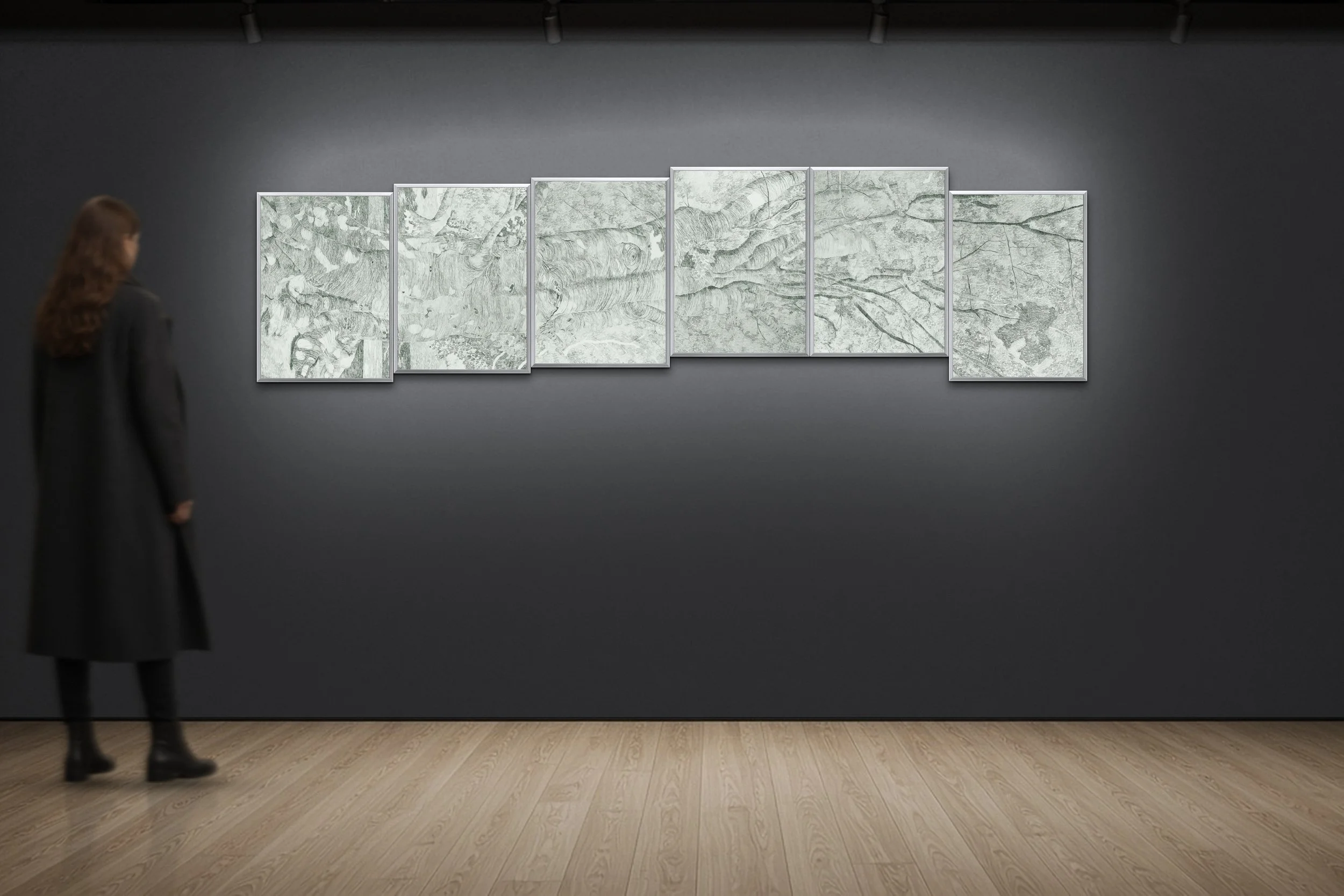
In Emma Ferrer's paintings and sculpture, a lone wolf howls into a dark forest, and a small horse stands nearly swallowed by a field of snow, head bowed, its hoofprints trailing behind. Mizue Sawano's branches carry soft caps of white and blush-pink snow, a sakura tree waiting beneath winter for its bloom. Sawano titles her small canvas of a solitary red branch, bare against the snow, Winter Hope, as if spring were implied in the solitude. Sofia Cacciapaglia's female figures in the snow converse in silence, communicating, as Cacciapaglia's figures often do, through glances and gestures. Gabriela Albergaria's close, patient drawing of a beech tree traces bark, limbs and branches at rest.
Marisa Morán Jahn's Feats & Faceplants
“I hold onto those rare moments when I feel like I am totally crushing it as an adult — like getting the dog to the park before 9 am off-leash hours and while there, scheduling the car inspection, signing up for afterschool basketball, and responding to work emails — all before returning home to defrost the spinach-berry smoothie I’d prepped days in advance to share with my son for breakfast while reviewing vocab flashcards. But most of the time I feel like I’m on the verge of a parental faceplant.
As a form of occupational therapy, I began snowboarding. To avoid obstacles, you have to respond nimbly with the least minimal effort. I’m possessed by those moments of carving across pristine snow which requires holding the line to avoid a wipeout. I’m not into catching air or rails but love love love half-pipes and superpipes. Then snowboarding was the gateway drug to surfing.
I’m mediocre at best in all three sports — snowboarding, surfing, parenting — but I focus on cruising and maintaining flow.”
Feats & Faceplants is a set of white, wall-mounted sculptures by artist Marisa Morán Jahn whose curvilinear features resemble miniaturized ski slope terrain park. An accompanying set of handcut 2D prints playfully conflates the plane of the paper and a snowy incline. In both, tiny red, ponytailed three dimensional figurines snowboarding along the tops, bottoms, and sides of the sculpture play with the viewer’s sense of orientation and scale. Behind a few figurines, red wall vinyl graphics resembling comic book starbursts and swirls accentuate the figures’ speed and velocity, inviting the viewer to imagine the snowboarders bursting through walls before plunging down impossibly enormous super-pipes, careening around turns at break-neck speed, and carving past the sculpture across the gallery walls’ vast snowy terrain, leaving the most baroque of sprays.
On the underside of one sculpture, an upside down snowboarder nimbly navigates the terrain’s ramps, chutes, and sidewalls as if defying all odds. At the same time, a few snowboarders lie strewn in the snow, face up or faceplanted with arms akimbo, boards strewn aside as if they biffed the jump, hurtled into an obstacle, or simply stumbled. For Jahn, Feats & Faceplants is thus a mental self-portrait of equipoise, the state of maintaining calm and counterbalance.
Exploring the human desire to glide, float, and fly as well as recreation and the struggles of carework are themes recurrent in some of Jahn’s other works. Feats & Faceplants sutures these themes together through the artist’s kinaesthetic fascination in snowboarding and surfing, two self-stated “addictions” that began while juggling her roles as a mother, professor, and artist.
She adds, “I think a lot of working mothers can probably relate to the notion that our idealized sense of self is to achieve some sort of mastery in the home or at our workplace. But in reality, the lack of structural support and systemic undergirding of carework in the U.S. means that most of us feel like we are struggling to simply stay upright. There are plenty of wobbles and full-on faceplants in this balancing act.”
Monday
05:00 Coat Sculpture + add fan for fast dry time
05:45 Finish presentation
06:15 Sand/paint sculpture
07:00 Tale dog to off-leash park hours
07:15 At park, sched car inspection
07:45 Pack afterschool snack. Defrost smoothie
08:00 Wake up LL
08:30 Spinach berry smoothies!
09:30 Sand and paint sculpture (2nd coat)
10:18 On subway text niece + TAs
10:35 Call/check w printer + framer
10:40 Hardware store for ¼” bolts, aerosol nibs
10:50 Photocopy handout'; ask AJ re staffing
11:00 Committee meeting
12:20 Lecture (during video parts, stretch + lunch)
01:45 Go to woodshop, trim armature. Call bro
02:45 Subway home. Treat! check snow report
03:15 Defrost chicken + prep
03:30 Snack
04:00 Walk dog
04:15 At dog park: online marketplace sell old snow gear
05:15 Pick up works at framer
05:40 Cook + call mom re: storage unit + moving plans
06:15 Dinner + vocab flashcards w LL
07:00 Sketch
08:00 Shower + think about sketches
09:00 After LL bedtime, sketch
09:30 Treat! check wave apps
10:00 Sleep
For Jahn, they are an homage to equipoise, the balance between gliding freedom and the daily labor of care. Together, these works make a season of listening: of silence and howl, rest and motion, solitude and play.
About the Artists
Emma Kathleen Hepburn Ferrer (Italy) was born in Morges, Switzerland and grew up in Florence, Italy surrounded by the works of medieval and Renaissance artists. As a young adult, Ferrer spent six years in New York where she maintained a studio practice whilst working in art galleries as a curator and artist liaison. In 2021 she returned to her home in Camaiore, Italy, devoting herself to her art practice. There, reflecting on the remote beauty of her rural environment, she began investigating a complex relationship between humans, animals, and Nature, and the relationship of these to a higher power.
Early in her artistic career Ferrer pursued a classical education in drawing and painting. One of the youngest students ever accepted into the academy, at 18 years of age Ferrer enrolled in the Advanced Painting program at the Florence Academy of Art, a traditional atelier where she would be imbued in the techniques, methodologies, and theories of the old masters. There, Ferrer undertook exhaustive studies from life including still life and the live figure, studying human anatomy as well as becoming fluent in classical materials in drawing, painting, and sculpture. While she initially honed in on an extremely naturalistic way of portraying reality, working solely from life, Ferrer over the last decade has looked inward, greatly loosening her style and leading with an emotive and intuitive practice.
Ferrer received her MFA from Central Saint Martins in London in 2024. Throughout the course of her education she has studied under and worked for artists such as Golucho and the maestro Ivan Theimer. She has curated the works of fashion designers Zac Posen and Manolo Blahnik, and artists such as Eugenio Pardini and Sofia Cacciapaglia.
Marisa Morán Jahn (US) is an artist of Ecuadorian and Chinese descent, Marisa Morán Jahn’s works redistribute power, “exemplifying the possibilities of art as social practice” (ArtForum). Codesigned with new immigrants and working families, Jahn’s public artwork, civic media tools, installations, films, architectural and urban-scale collaborations have engaged millions both on the street and at venues such as the United Nations, Tribeca Film Festival, Obama’s White House, Museum of Modern Art, and Venice Biennale of Architecture. Her work has reviewed in The New York Times, the BBC, Univision, Hyperallergic, Art in America, Architectural Review, Wall Street Journal, Los Angeles Times, PBS, and hundreds more. She has received grants and awards from Sundance, Creative Capital, and is currently an Artist in Residence at The National Public Housing Museum, a Senior Researcher at MIT. Jahn has taught at Columbia University, MIT (her alma mater), and Parsons/The New School where she is the Director of Integrated Design. With Rafi Segal, Jahn co-authored a book, Design & Solidarity (Columbia University Press, 2023) and co-founded Carehaus, the U.S.’s first care-based co-housing project (carehaus.net).
Mizue Sawano (Japan/US) (b. 1941, Moriguchi, Osaka Prefecture), the daughter of a well-known novelist and journalist, is a Japanese American painter whose studio practice spans over five decades, traversing Tokyo, Paris, and New York. Sawano's work explores the poetics of the natural world through a contemporary lens, often engaging with natural motifs primarily in oil paint.
Trained in both Japanese and Western art traditions, Sawano earned her BFA and MFA from Tokyo National University of Fine Arts and Music before receiving a French government scholarship in 1966 to study under Maurice Brianchon at the École des Beaux-Arts in Paris. She relocated to New York in 1969, where she continued her studies at the Art Students League under a Merit Scholarship and established a long-term studio practice. Through her extensive studio practice, Alexandra Munroe, curator and Asia scholar, observes that Sawano “focused on figures and landscapes in an increasingly free and fluid manner, moving farther yet from realist towards abstract forms”.
Sawano has exhibited widely in both solo and group exhibitions in the United States, Japan, and internationally, including presentations in Tokyo, Washington, D.C., Mexico City, and Morocco. Her work is held in both public and private collections. Sawano has exhibited at the National Museum of Women in the Arts in Washington, D.C., the Edwin O. Reischauer Institute of Japanese Studies at Harvard University, and the Brooklyn Botanic Garden as well as many others. She has also completed major public commissions in Morocco through the Assilah Forum Foundation. Over the years, Sawano has been recognized for her contribution to cross-cultural artistic dialogue, particularly between the U.S. and Japan, and is a recipient of multiple honors, including “Artist of the Year” at the 1974 Mitsukoshi Emerging Artists Exhibition in Tokyo.
Sofia Cacciapaglia (Italy) was born in Ponte dell’Olio, Italy in 1983. She studied Fine Art at the Accademia di Belle Arti di Brera in Milano where she graduated in 2006. After graduating she moved to New York in 2007 and had her first solo show at Industria SuperStudio, curated by photographer Fabrizio Ferri. Since then her work has been exhibited in galleries, foundations and museums in Italy, Switzerland, UK and China. In 2011 she became the youngest artist invited to the Italian Pavillon for the 54° International Art Exhibition La Biennale di Venezia.
In May 2019, she completed “Locus Amoenus,” her first large 360° installation that covered the walls of her studio with discarded cardboard boxes, which she transformed into a blossoming garden from floor to ceiling. This work brings with it an environmental message, giving the salvaged material a second life through the representation of nature and the rebirth of spring.
Cacciapaglia’s paintings are about women. In her large oil paintings, figures live in a suspended, metaphysical world without any reference to reality. The female figures – monumental but also light and ethereal– emerge from the dream world and inhabit an enchanted dimension: they are linked to each other through contact and gazes, by silent dialogues which are at the base of the compositional balance. These women are symbols of a primordial woman. Painted flowers are seen as an expression of happiness and sweetness, like the female bodies. They are often very large and out of scale and dominate the observer in a veiled, magical and immersive way.
In her paintings, Cacciapaglia I seeks lightness, harmony, the softness of shapes and colours, but above all mystery and silent contemplation. Apart from canvas, her favorite materials are simple ones such as cardboard and wrapping paper, because of their material structure and their neutral background color which gives the work a poetic vibration.
Gabriela Albergaria (Portugal/Belgium) is a Portuguese artist based in Lisbon and London. Having completed a degree in Painting from the Faculty of Fine Arts in Porto, she held numerous residencies, such as Künstlerhaus Bethanien, Berlin (2000/2001) / Cité Internationale des Arts, Paris (2004) / Villa Arson, Centre National d’Art Contemporain, Nice (2008) / The University of Oxford Botanic Garden, in colla- boration with The Ruskin School of Drawing and Fine Art, Oxford (2009/2010) and Winter Workspace, Wave Hill Public Garden and Cultural Center, New York (2012), Residency Unlimited, New York, USA (2015), and Flora ars+natura, Bogotá, Colombia (2015)
Albergaria's work involves one territory: Nature. A nature manipulated, planted, transported, set in hierarchy, catalogued, studied, felt and recalled through the ongoing exploration of gardens/cultural landscapes in photography, drawing and sculpture. The artist views gardens/cultural landscapes as elaborated constructs, representational systems and descriptive mechanisms that epitomize a set of fictional beliefs that are employed to represent the natural world. Gardens are also environments dedicated to leisure and study, cultural and social processes that produce a historical understanding of what is knowledge and what is pleasure. More generally, the images of gardens and plant species employed by the artist are used as devices to reveal processes of cultural change through which visions of nature are produced. Mediated by representation systems they generate different versions of what we see as landscape—itself a complex system of material structures and visual hierarchies, cultural constructs that define the framing of our visual field.
Colecção Norlinda e José Lima, São João da Madeira, Portugal / Instituto Figueiredo Ferraz, Ribeirão Preto, Brasil / Museu Nacional dos Açores, Portugal / Colecção Luis Augusto Teixeira de Freitas, Portugal / Museu de Arte Moderna da Bahía, Salvador, Brasil / KFW bankenngrupe, Frankfurt/ Lars Pahlman, Finland / BESart- Banco Espirito Santo, Lisboa / CAM, Centro de Arte Moderna Fundação Calouste Gulbenkian, Lisboa / CAPC, Círculo de Artes Plásticas de Coimbra, Portugal / Colecção PLMJ, Lisboa, Portugal / Perez Collection, Miami, USA / Colección Navacerrada, Spain / Colección Coca Cola, Spain / Coleção António Cachola, Elvas, Portugal / Fundação EDP, Lisbon, Portugal / Várias colecções particulares/ Several private collection
Quisque iaculis facilisis lacinia. Mauris euismod pellentesque tellus sit amet mollis.