
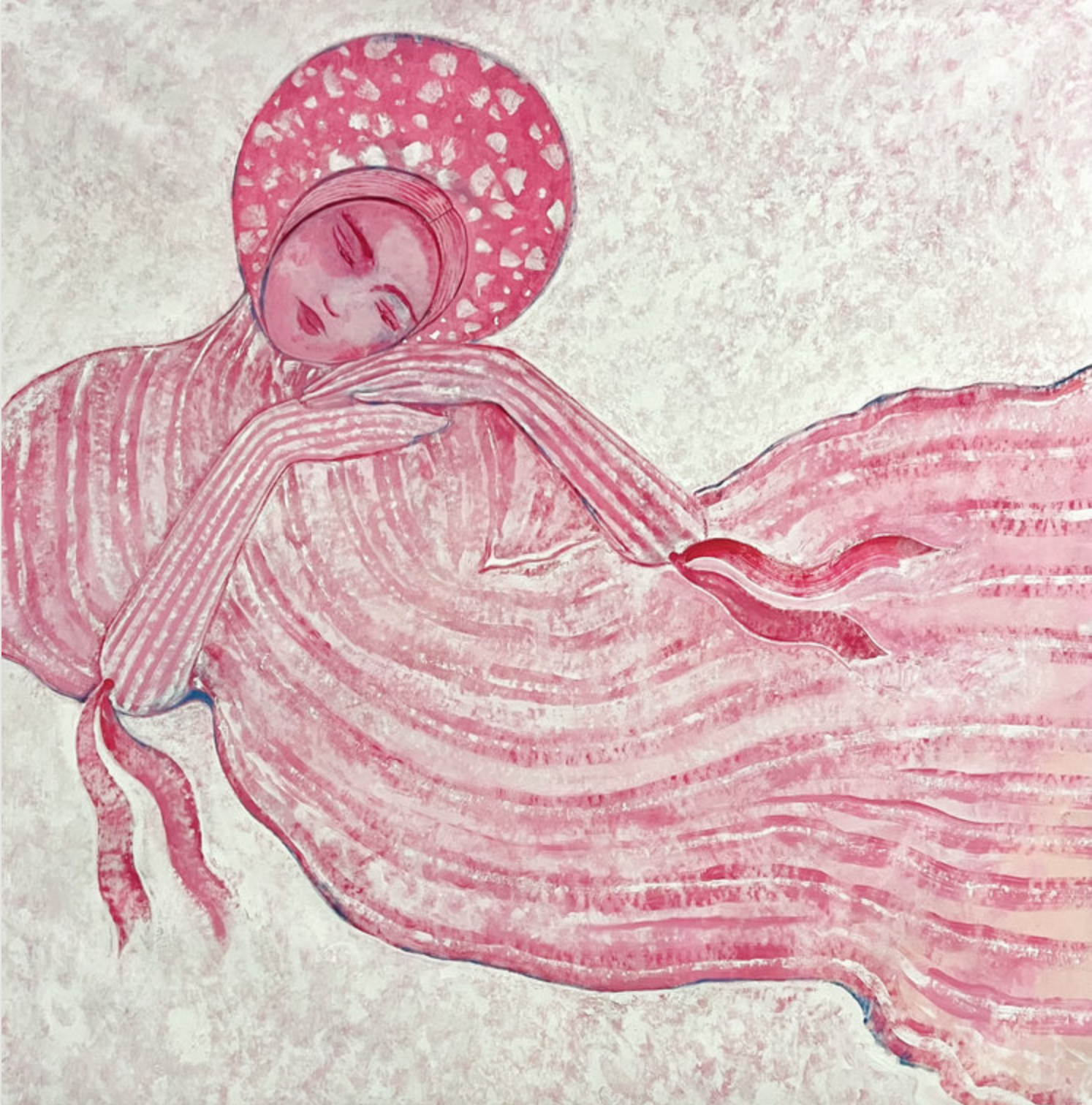
Sofia Cacciapaglia: Apparizione
Essay by Emma Saperstein, Chief Curator and Director of Education, San Luis Obispo Museum of Art
April 30, 2026 – June 27, 2026
Opening April 30, 6-8 pm
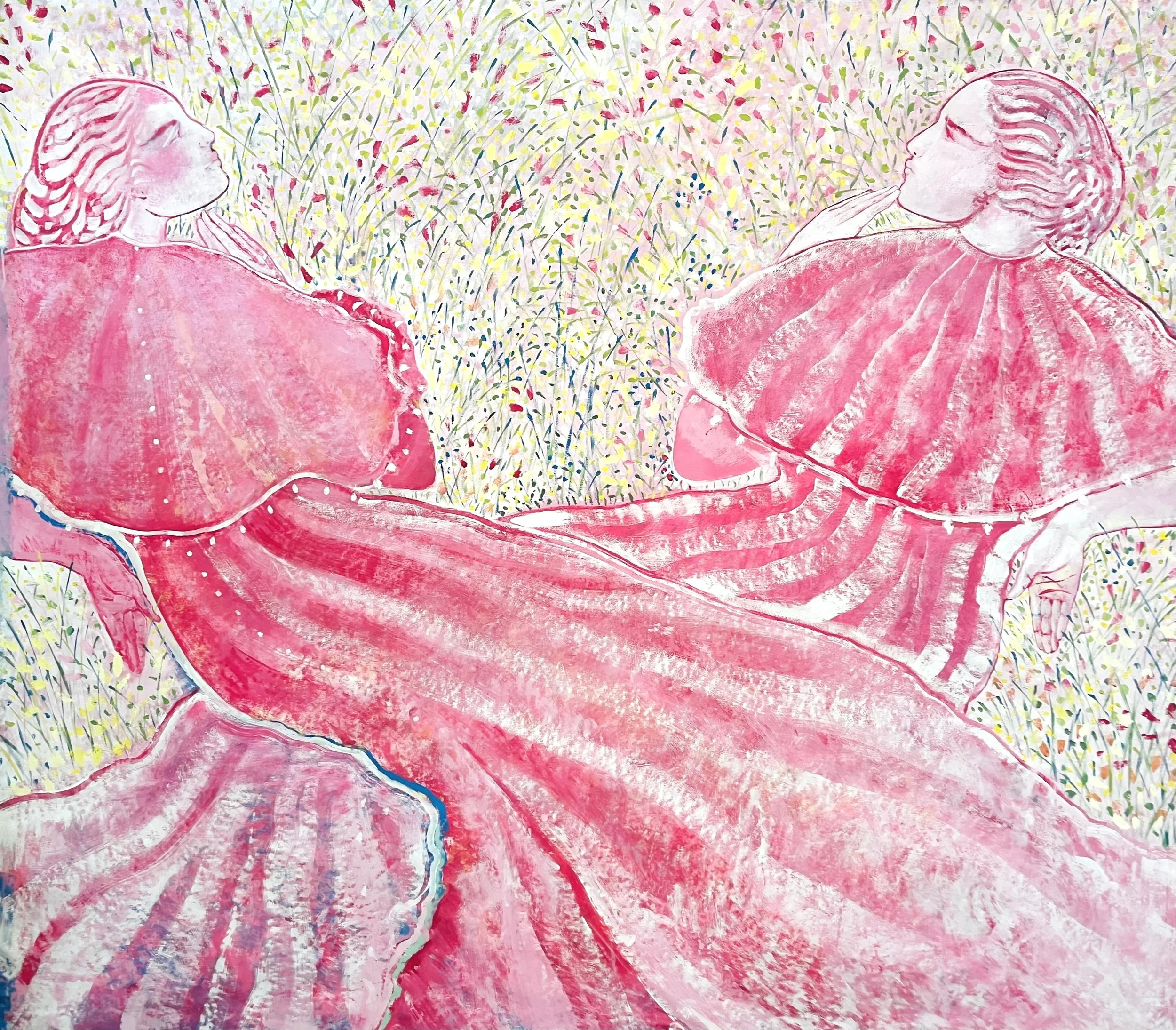
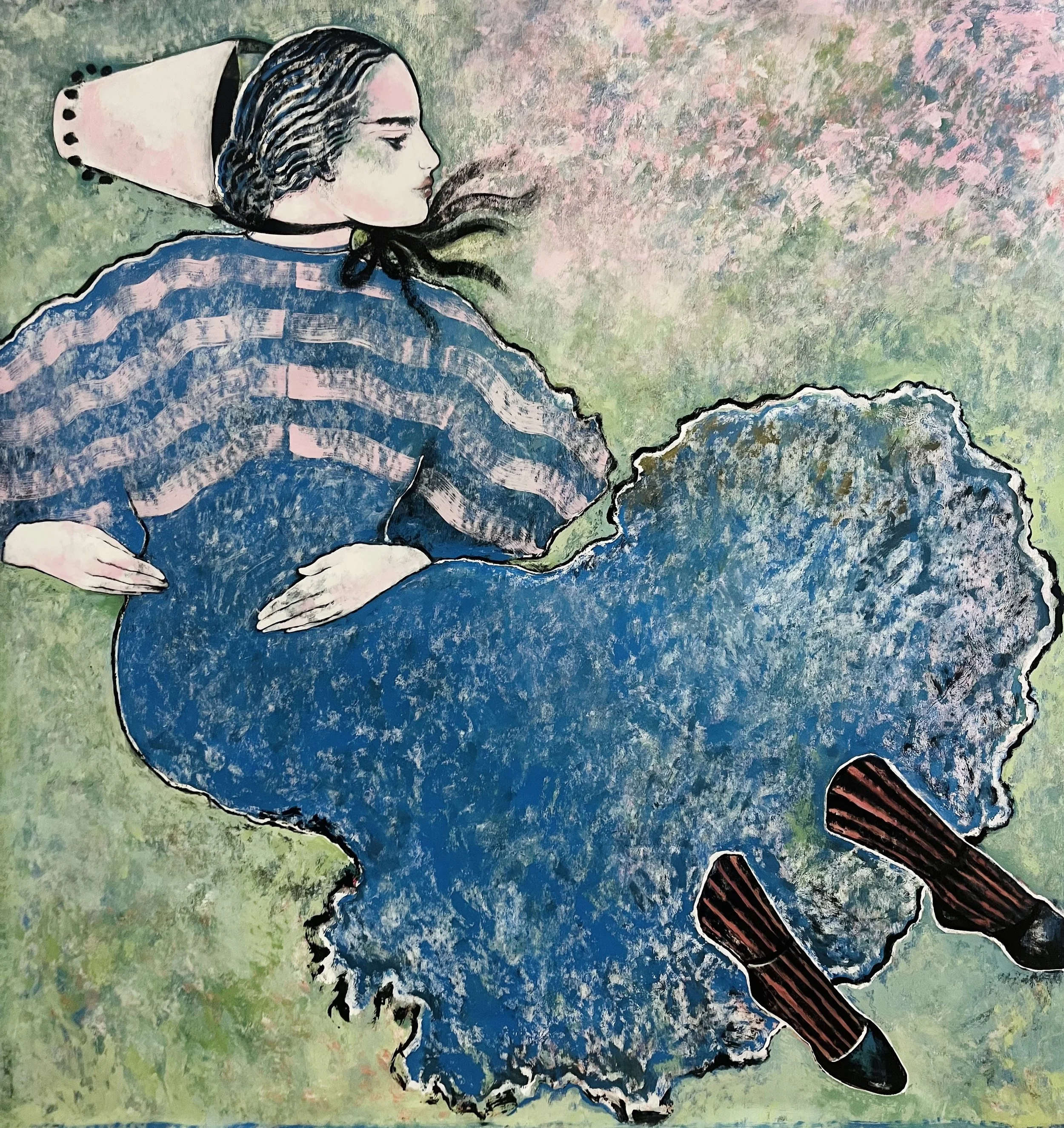
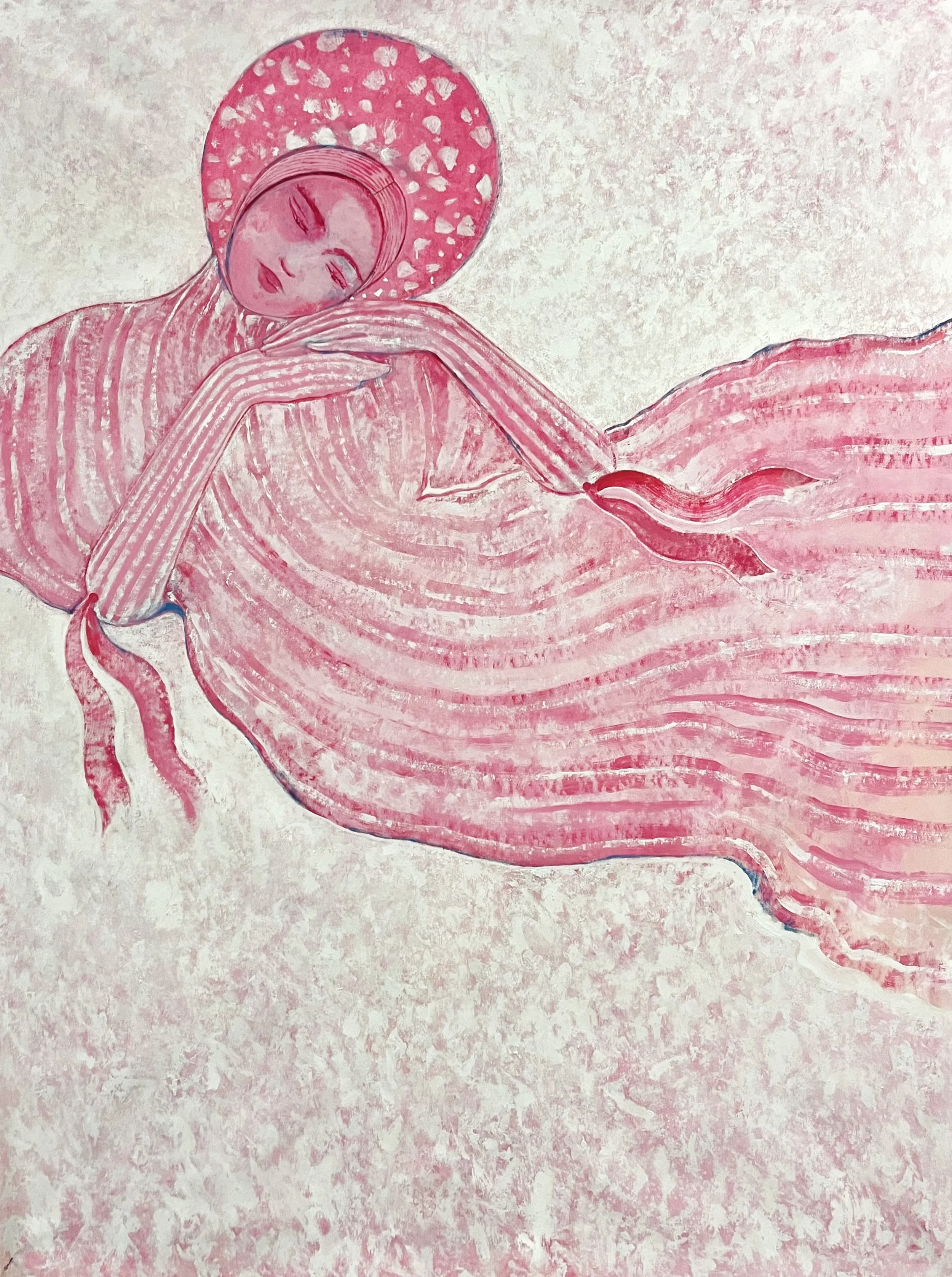
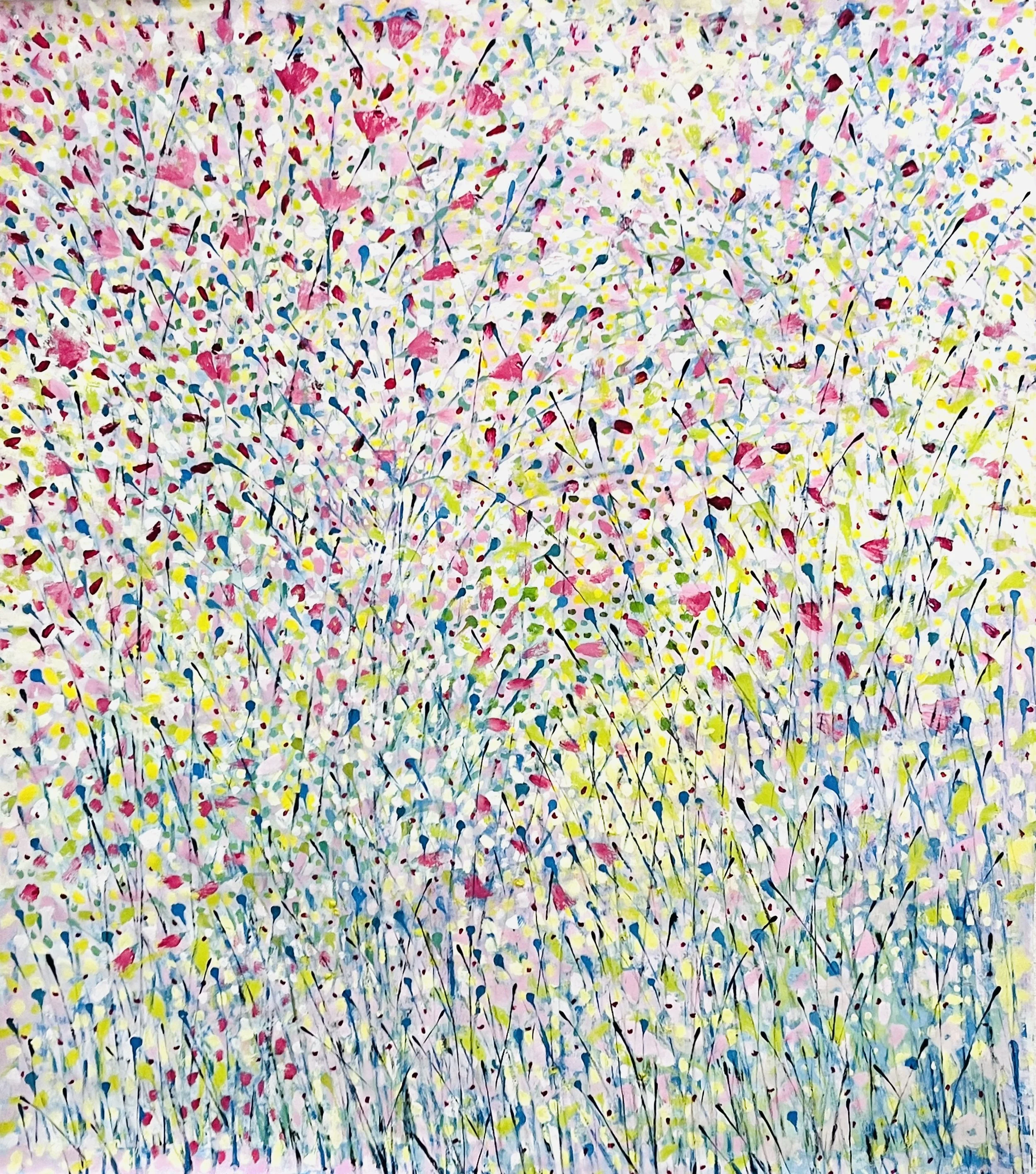
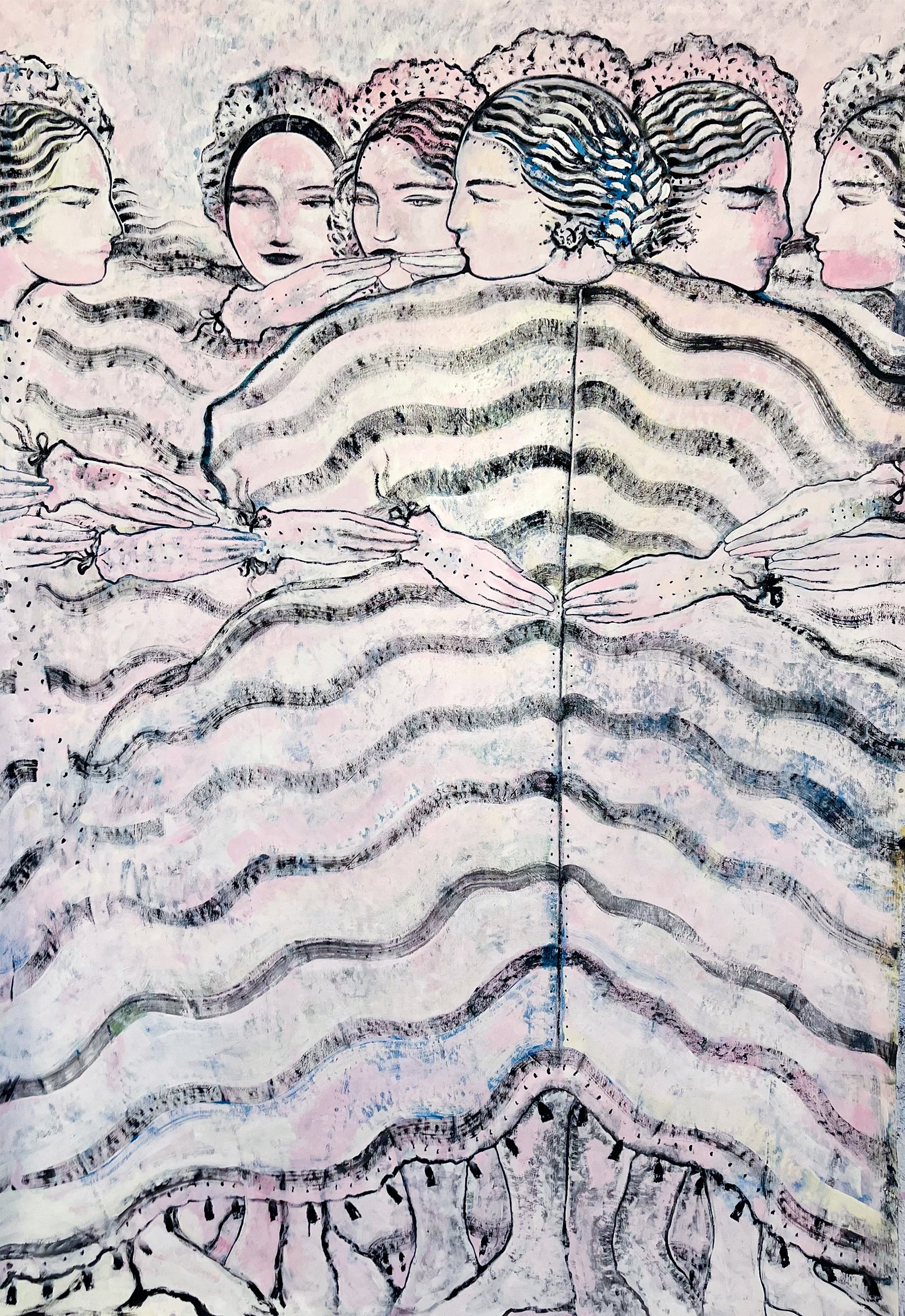
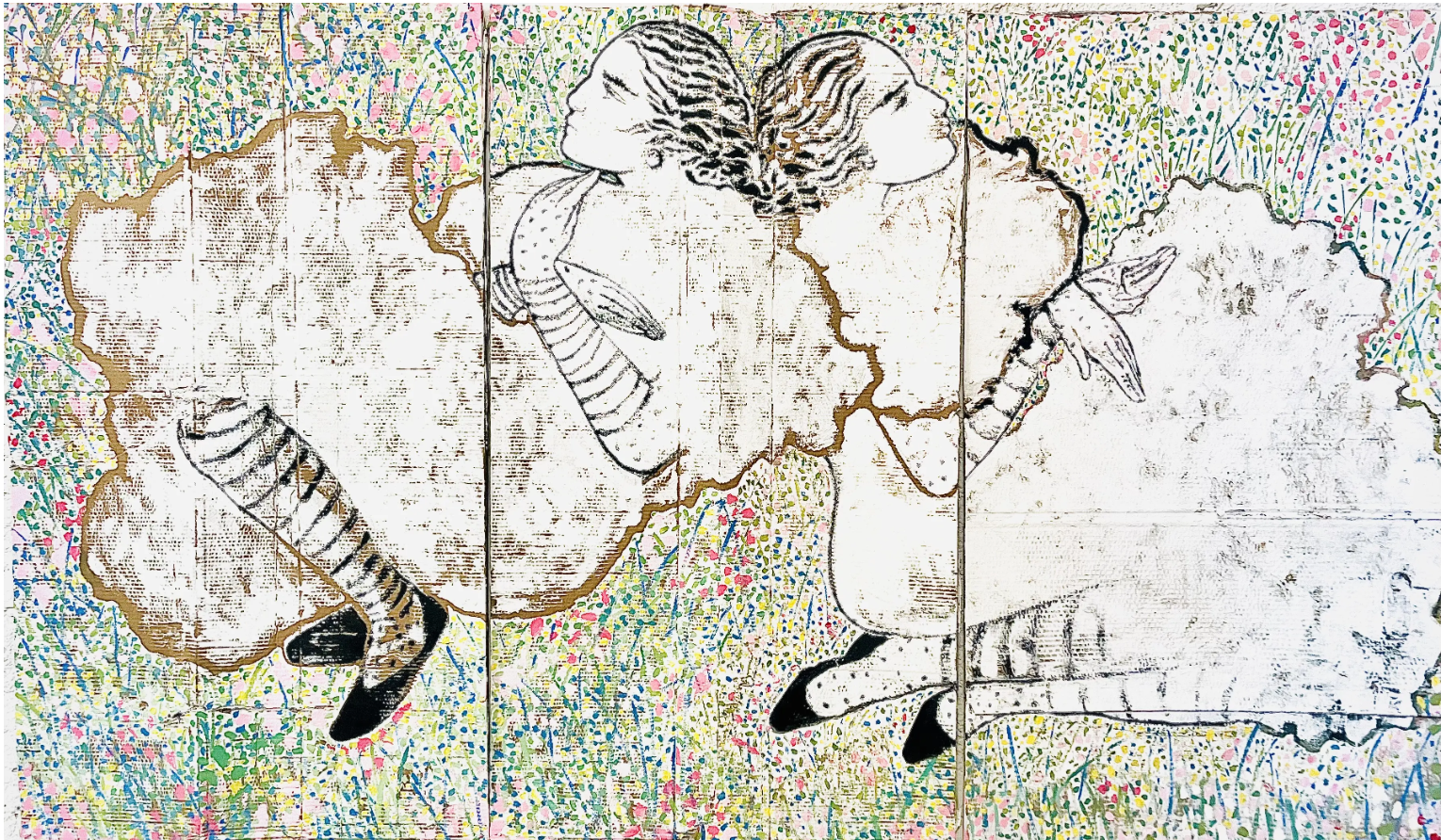
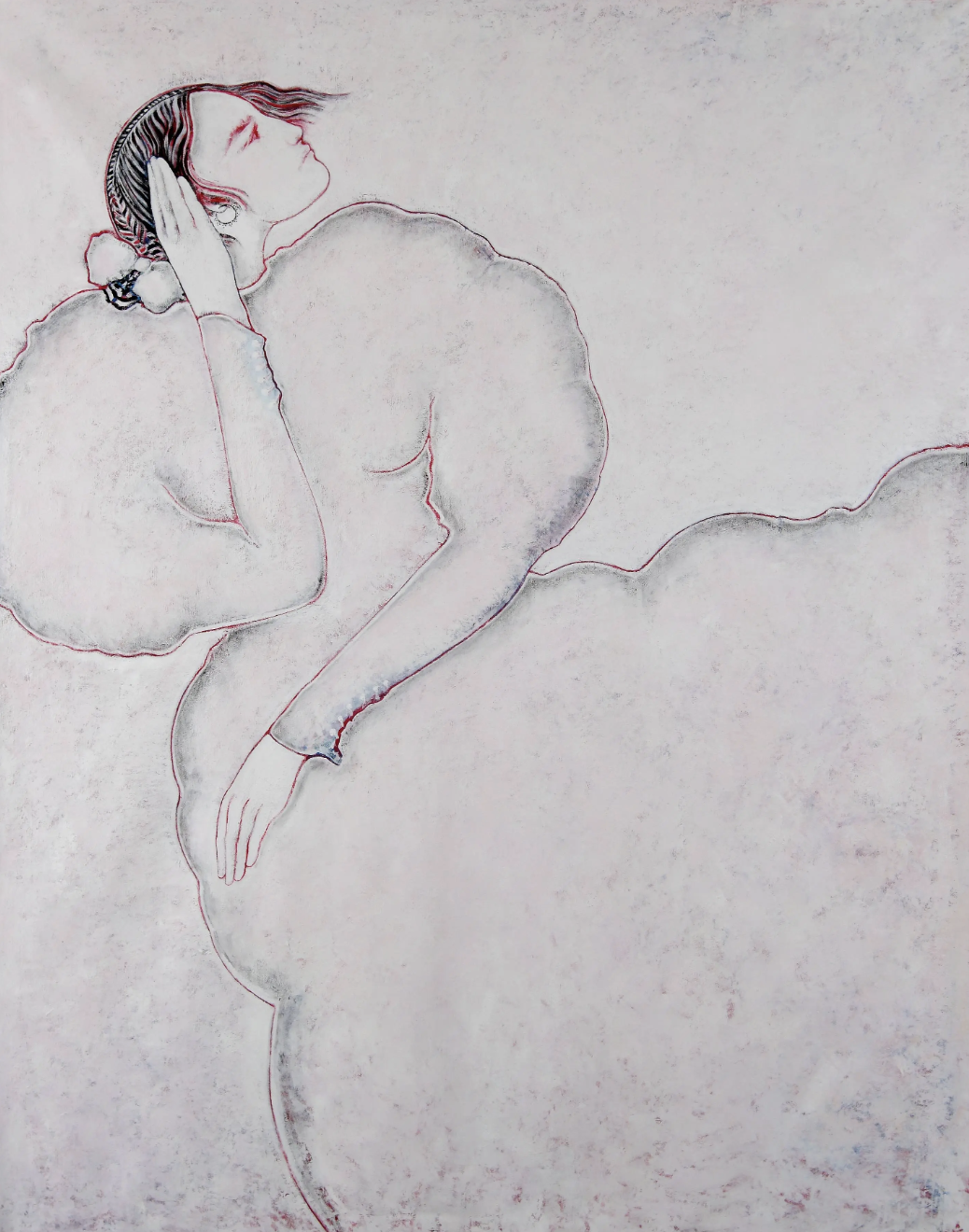
Sapar Contemporary is pleased to announce their third solo exhibition of works by Sofia Cacciapaglia (Italy). The women in Sofia Cacciapaglia’s paintings appear with an immediacy—belonging both to every era and to none, like an apparition of an angel or spirit. In her practice, these women call both to each other and to us—dancing, seducing, resting, and perhaps casting their spells, destroying and rebuilding their surroundings into a more hopeful future. They exist outside the boundaries of canvas or cardboard; they are not images meant to be intellectually engaged with, but presences that feel alive. In conversation with sites of apparition—fields and flowers, which Cacciapaglia also calls feminine, on both permanent and temporary material—the works invite us to engage in our own apparitions, our visions, and the poetic and indescribable.
Apparizione
Sofia Cacciapaglia’s home studio in Italy is situated in a neighborhood where there are many shops, whose owners often leave their boxes in the courtyard nearby. Cacciapaglia, who already had a vibrant painting practice on canvas, started taking these pieces of cardboard into her studio and using them as material to paint on. This new material to Cacciapaglia was much more urgent and gestural than the slower and methodological approach she has in her oil paintings on canvas. It is not the only way that this urgency appears in Cacciapaglia’s practice. The women in her paintings appear with an immediacy - belonging both to every era, and to none, like an apparition of an angel or spirit. This concept of apparition is crucial in framing Cacciapaglia’s practice at large, and the works collected for this exhibition in particular.
The Merriam-Webster Dictionary defines apparition as: 1) an unusual or unexpected sight: phenomenon 2) the act of becoming visible: appearance, with Latin origins - the prefix is from the Latin appāri-, meaning “to be visible, be evident, attend, serve” (Merriam-Webster 2026). Cacciapaglia’s women are unusual, they are phenomena, they are other-worldly, and they are dramatically visible. They dance, they gossip, they whisper, they gesture, they lounge, they rest, and they ponder. They are wise and omnipotent apparitions. But beyond the figures themselves, the newer landscape works in the exhibition create the context and set the scene, becoming the site of apparition, not unlike the poppy fields in the Wizard of Oz, and they are often painted on cardboard. Sofia says of these works “Cardboard, like wrapping paper, has this neutral yet elegant and natural quality—that camel-brown tone. What I especially love is its inner structure: when you paint on it, it feels as if there is already a trace underneath, something that adds a kind of poetic mark to the brushstroke. Even the folds and lines of the boxes are important to me,” (Cacciapaglia 2026). Even the material choice reflects the concept of apparition - a fleeting and powerful presence. A secret vision that both lasts forever, and disappears.
Depictions of, or references to, apparitions have been present in diverse practices and genres of art history since time immemorium. One relevant example (of which there are many) is the French Symbolist artist Gustave Moreau’s 1876 watercolor Apparition depicting his version of the Biblical story of the beheading of John the Baptist utilizing the femme fatale Salome, who conjures, and casts a spell. In the Biblical narrative Moreau references, Salome performs a dance so seductive that the King grants her any wish. Her presence transforms those around her. In Cacciapaglia’s painting above, two women in red striped dresses dance a spell of their own, their expressions focused and intense. Between the two of them, there are fifteen feet, implying quick-footed movement. Unlike Moreau’s painting, which depicts the seductive dance after it has already been concluded, we encounter Cacciapaglia’s women in the middle of their dance. The apparition exists in both their very presence, and in what they may call forth.
Of Moreau’s depiction of Salome, art historian Peter Cooke highlights the immobility and rigidity of her figure - she is not moving quickly to entertain, she moves with intention and complete control - and it appears that her body and mind occupy different terrains. He says “dance often encompasses moments of rest (Cooke 211, 218).” Indeed, even in dance, many of Cacciopaglia’s women’s eyes are at rest or entirely closed, and several paintings depict the women in complete rest - lounging in fields together. Cooke says, “Moreau was able to emphasise the timeless universality of his subject, which, in his eyes, represented a ‘femme éternelle - & the eternal woman,” (Cooke 211, 222). In Moreau’s Apparition, Salome calls forth a spell, a mysterious and magical ritual, that renders all who surround her speechless and under her control. The apparition is visible only to Salome, but revealed to the viewer of the painting, and in Cacciapaglia’s paintings, for those experiencing them, the women themselves become apparitions.
But, Cacciapaglia’s eternal women do not enchant alone. She says of her figures: “women supporting one another, looking at each other, touching hands, eyes, feet, holding each other in an embrace — is fundamental. It’s the heart from which the composition begins: the contact between these women, how they support each other, is at the core of my work,” (Cacciapaglia 2026). The women in Sofia’s practice call both to each other and to us - dancing, seducing, celebrating, resting, and perhaps, if we are lucky, enchanting us, and rebuilding their surroundings into a more hopeful future. As Jenny Hval describes in her novel Girls Against God, “We pull the structures down with us,” (Hval 2020, loc. 564). Cacciapaglia’s work and her community of women so embedded in the idea of apparition, exist outside of the boundaries of the social structure, of time, and of material. They are not images we are meant to intellectually engage with. They are alive.
Apparitions render us speechless. Those who have experienced an other-worldly presence or vision, often have trouble describing in words their experiences. Apparitions exist in the indescribable parts of our bodies and spirits, in between our blood and bones, in the nuances of our minds. Cacciapaglia herself says “Women have always fascinated me in my work because these women are symbolic — eternal, ancestral, not tied to any specific time or era, yet speaking across all times. It’s not that I don’t want to tell my own story as a woman, but my work starts from me to speak to everyone. This is also why I choose not to give titles: I believe that the language of painting is a poetic language that stands on its own and has nothing to do with words.” In conversation with the sites of apparition - the fields and flowers, which Cacciapaglia also calls feminine, on both permanent and temporary material, we are invited to engage in our own apparitions, our visions, the poetic and indescribable. In this way, this exhibition ‘Apparazione’, brilliantly sets the stage and welcomes us in.
- Emma Saperstein
“Apparition,” Merriam-Webster, accessed March 12, 2026, Merriam-Webster dictionary entry.
Gustave Moreau, The Apparition (1876/1877). Oil on canvas, 55.9 x 46.7 cm (22 x 18.3 in). Fogg Museum, Harvard
Jenny Hval, Girls Against God (London: Verso, 2020), Kindle edition.
Peter Cooke, “‘It Isn’t a Dance’: Gustave Moreau’s ‘Salome’ and ‘The Apparition,’” Dance Research: The Journal of the Society for Dance Research 29, no. 2 (Winter 2011): 218.
Sofia Cacciapaglia, email interview with the author, February 2, 2026.
About Artist
Sofia Cacciapaglia was born in Ponte dell’Olio, Italy in 1983. She studied Fine Art at the Accademia di Belle Arti di Brera in Milano where she graduated in 2006. After graduating she moved to New York in 2007 and had her first solo show at Industria SuperStudio, curated by photographer Fabrizio Ferri. Since then her work has been exhibited in galleries, foundations and museums in Italy, Switzerland, UK and China. In 2011 she became the youngest artist invited to the Italian Pavillon for the 54° International Art Exhibition La Biennale di Venezia.
In May 2019, she completed “Locus Amoenus,” her first large 360° installation that covered the walls of her studio with discarded cardboard boxes, which she transformed into a blossoming garden from floor to ceiling. This work brings with it an environmental message, giving the salvaged material a second life through the representation of nature and the rebirth of spring.
Cacciapaglia’s paintings are about women. In her large oil paintings, figures live in a suspended, metaphysical world without any reference to reality. The female figures – monumental but also light and ethereal– emerge from the dream world and inhabit an enchanted dimension: they are linked to each other through contact and gazes, by silent dialogues which are at the base of the compositional balance. These women are symbols of a primordial woman. Painted flowers are seen as an expression of happiness and sweetness, like the female bodies. They are often very large and out of scale and dominate the observer in a veiled, magical and immersive way.
In her paintings, Cacciapaglia seeks lightness, harmony, the softness of shapes and colours, but above all mystery and silent contemplation. Apart from canvas, her favorite materials are simple ones such as cardboard and wrapping paper, because of their material structure and their neutral background color which gives the work a poetic vibration.
About Writer
Emma Saperstein’s diverse experience includes serving as studio manager to artist Titus Kaphar and over a decade of administrative, editorial, and curatorial projects in arts and publishing communities. From 2016-2021, she worked as Curator of the Miossi Art Gallery at Cuesta College and as the Global Portal Curator for Shared Studios, managing complex dialogue-based programming projects with the UN, BBC, the Obama Foundation, WGBH, and more. She has guest juried exhibitions and public arts projects in California and beyond. Emma holds an MA in Education from Cal Poly San Luis Obispo and an MA in Curating from the University of Aarhus in Denmark. She currently serves as Chief Curator at the San Luis Obispo Museum of Art.
Quisque iaculis facilisis lacinia. Mauris euismod pellentesque tellus sit amet mollis.